
- Key Takeaways
- Why Choose Skid Steer Rentals?
- Skid Steers in Action
- The Hidden Ownership Burden
- What Defines a Good Rental Partner?
- Navigating Rental Agreements
- Your Next Project Partner
- Conclusion
- Frequently Asked Questions
- How do I know if renting a skid steer is better than buying one?
- What types of projects can a skid steer rental handle?
- What should I look for in a reliable skid steer rental company?
- What is usually included in a skid steer rental agreement?
- Do I need insurance to rent a skid steer?
- How do attachments affect the cost and performance of a skid steer rental?
- What hidden costs should I watch for with skid steer rentals?
Key Takeaways
- Skid steer rentals minimize upfront costs and convert big capital expenditures into manageable, predictable operating expenses, safeguarding cash flow for other priorities such as labor, materials, or landing new deals. This works well for businesses with fluctuating work or those who don’t want to be tied down financially.
- Renting eliminates much of the maintenance and repair burden as rental companies generally take care of servicing, inspections, and issue resolution. That means less downtime and ensures you have reliable, ready-to-roll skid steers and attachments available for every project.
- Flexible rental options enhance fleet agility by letting you scale up or down as your project load fluctuates and transition between models, capacities and attachments. This versatility powers everything from tight urban jobsites to fierce industrial or oilfield work.
- Seasonal and project-based rentals prevent you from owning underused equipment and the associated ownership costs, like storage, insurance, depreciation, and transport. Businesses can match expenses precisely to project timelines, return equipment during slow seasons, and cut administrative and logistical overhead.
- A quality skid steer rental partner provides a fleet of contemporary, meticulously maintained loaders, transparent contracts, and robust logistical support such as timely delivery, pickup, and technical assistance. By considering equipment condition, term flexibility, and insurance options, it allows renters to choose providers that fit their risk appetite and required operations.
- Checking rental contracts and insurance coverage guarantees you know what’s on your plate, what you’re liable for, and what is included in services before the work starts. Checklists for contract terms, operator requirements, and safety standards help ensure skid steer use on any site is compliant, efficient, and safe.
Skid steer rentals are brief equipment leases that provide entry to these little, versatile loaders without having to pay for one. Most contractors, landowners, and property managers turn to rented skid steers for grading, digging, hauling, snow removal, and small demolition on tight sites. Rental fleets typically offer a variety of sizes, from compact units for backyards to high-volume models for busy job sites, as well as attachments such as buckets, forks, augers, and brush cutters. Rates generally go by the day, week, or month, which helps align the machine with the project and budget. To schedule effectively, they’re inclined to shop rates, machine size, lift type, and delivery options. The following paragraphs dissect those details.
Why Choose Skid Steer Rentals?
Skid steer rentals provide access to powerful compact equipment without tying your capital into an equipment purchase. They perform across fall, winter, spring, and summer and accommodate a diverse blend of assignments from mini landscaping projects to bustling construction zones.
1. Financial Relief
Purchasing a new skid steer or compact track loader can lock up a significant amount of capital, particularly if you require multiple units or lift types such as radial and vertical. Renting eliminates the huge initial cost, so you’re only paying for the days, weeks, or months you use the machine. This converts a capital asset expense into a transparent operating expense that’s simple to incorporate into a project budget.
Renters can be assured that most rental rates include regular service, basic wear parts and scheduled checks, so you’re less likely to get hit with a surprise repair bill for a hydraulic leak or engine fault. That assists cash flow for small contractors who need to keep money available for fuel, labor, permits, or critical equipment. For instance, a landscaping firm can rent out a wheeled skid steer for two weeks of mulch and dirt loading and then redirect that same cash toward marketing or staff training once the job is over.
2. Maintenance Freedom
With rentals, your provider takes care of routine service, inspections, and most repairs from oil changes to track tension checks. Equipment comes prepped to dig in, reducing downtime on the site and keeping your crews out of the workshop and on the level, digging or loading.
If a unit breaks down, the rental company can usually swap it out with another skid steer so you don’t have to search for parts or a trained mechanic. This comes in handy during peak seasons, such as winter snow clearing, where waiting for repairs can bring sidewalk plowing or salting to a halt. Dependable, serviced machines are essential when you’re working on wet, muddy, snowy ground that already hinders progress.
3. Fleet Agility
Just like many businesses use rentals to scale their fleet up or down as workload shifts. A small crew, for example, could require just one mini skid steer for light site prep in the spring, then three larger-capacity models for a quick demolition job in the summer. Renting simplifies that leap because you can add or return machines as the timeline shifts.
Switching between models is easy. One week you could operate an agile wheeled skid steer to shift pallets around in a compressed yard, and the next week a tracked skid steer for more security on softer soil or rolling ground. Attachments add more range: buckets for earthmoving, forks for pallets, augers for fence posts, or snow blades for winter maintenance.
Rental fleets typically include big names — Bobcat, John Deere or Wacker Neuson — so you can try different controls, lift paths, and comfort levels before your next purchase. You experience firsthand how a vertical lift unit tackles high truck loading compared to a radial lift unit performing low digging work, taking real jobs as your test ground.
4. Seasonal Scalability
Seasonal work is among the best reasons to rent. During the winter, for example, numerous businesses truck in skid steers with snow buckets or spreaders to clear their parking lots, sidewalks, and driveways, and then return them once the ice period has passed. Then, in warmer months, those same companies could rent compact track loaders to grade a new building pad or reshape expansive landscaping.
Short or long-term rental plans can align with local weather cycles, whether you experience heavy snow, extended rainy seasons or dry summers. Off-season, you miss out on storage, insurance and idle maintenance costs that come with owning machines sitting in the yard for months. This is useful for contractors in areas with rapid transitions between winter snow work and summer earth moving.
Since tracked skid steers maintain their balance on mud or loose soil and wheeled models pivot rapidly on hard ground, you can select the appropriate variety as ground conditions change throughout the season. That flexible matching of machine to season is difficult to justify if you purchase just one and attempt to make it work in every situation.
5. Technology Access
Rental fleets are often refreshed on a regular schedule, giving renters access to newer skid steer loaders with more efficient fuel consumption, more powerful lift, and updated safety systems. Features such as enhanced operator visibility, backup cameras, or more fluid joysticks can boost both productivity and safety in congested sites.
You can even rent units with contemporary add-ons for specialized tasks, like laser-assisted grading blades for exacting site prep, brush cutters for clearing, or high-flow hydraulics for intensive attachments. On farms or large estates, this translates to one rented machine accomplishing anything from moving feed to lane cleaning, depending on the attachments you rent alongside it.
Skid Steer Rentals & New Technology Trying new technology on a rental basis reduces risk over buying a machine and then discovering that its features don’t match your daily work. It gives you actual real-world data on fuel use, cycle times and operator feedback that can help inform your long-term fleet plans if you buy later.
Skid Steers in Action
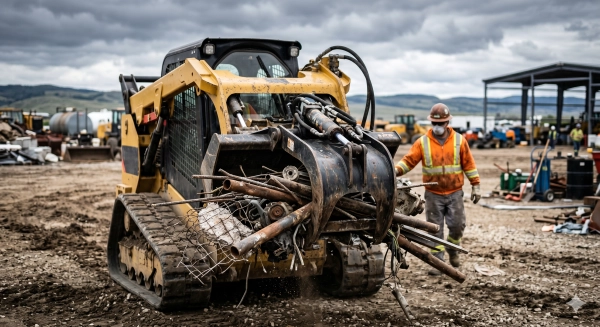
Common oilfield uses for skid steers include:
- Lease construction and pad preparation
- Material handling and short‑haul loading
- Site cleanup after drilling or demolition
- Snow removal from roads, pads, and yards
Buckets, pallet forks, grapples, sweepers and snow tools turn one skid steer into a mini fleet. With simple training, sometimes only a few hours, the majority of operators can operate a rented skid steer safely to do lifting, grading, leveling or cleanup.
Lease Construction
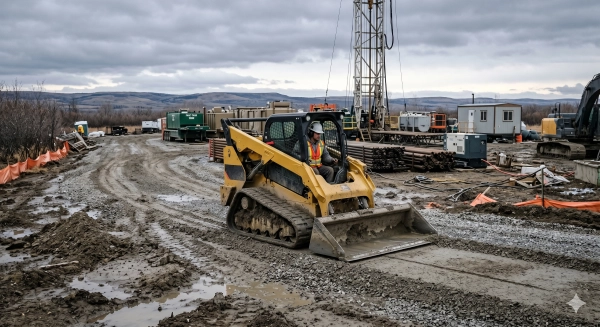
Once the rough grading is done by larger earthmovers, a skid steer fine grades and levels the pad, trims edges, and backfills around culverts. Operators utilize smooth buckets for finishing or toothed buckets for light digging and shaping.
As well as access road work — skid steers. On tight or spongy tracks, the tracked units spread gravel, fill low spots, and clean windrows. Wheeled models remain on tougher terrain and zip more quickly between work sites. Tracks versus tires is generally a factor of soil condition, slope, and duration of use of the road.
Another typical lease job is moving pipe, pallets of fencing, and small tanks. With pallet forks or a grapple, mid-size machines with ROC around 1,400 to 1,600 kg shuttle loads from laydown areas to the wellhead or perimeter fences, weaving around equipment and parked trucks where larger loaders would be hard to position.
Material Handling
For regular handling, skid steers load and unload gravel, lumber, bagged chemicals and other heavy objects onto trucks. A bucket handles bulk material and pallet forks lift stacked goods and framed pipe bundles.
Grapple buckets help you grab irregular scrap, loose pipe offcuts or brush. On commercial or industrial projects, bigger machines with ROC in the 1,500–1,550-kilogram range—or even 1,550 and up—lift heavier pallets or pipe racks that lighter units cannot safely shift. These machines still remain short enough to work adjacent to buildings or tanks.
As the machine can spin in its own length and move at a good clip, it reduces time spent on foot or with smaller tools moving materials. If the skid steer in action operators stage stock closer to the work face, they can feed crews faster and cut double handling around the site.
Site Cleanup
Skid steers clean up after drilling, maintenance, or demolition by pushing, loading, and hauling debris to bins or stockpiles. They eliminate drill cuttings piles, shattered pallets, and debris that would bog down other trades.
They clear scrap metal, loose rocks, and regrowth from lease edges and old yard sites. This keeps work zones clean and minimizes tripping and tire damage.
| Attachment | Best For | Key Benefit |
|---|---|---|
| General bucket | Soil, gravel, mixed debris | Simple bulk cleanup |
| Grapple bucket | Scrap, logs, twisted metal | Secure grip on odd‑shaped items |
| Sweeper broom | Fine dust, chips on hard surfaces | Leaves pads and roads cleaner |
| Landscape rake | Rocks, roots, light vegetation | Screens and smooths in one pass |
Quick cleanup complies with safety regulations, maintains clear egress paths and allows crews to keep moving according to plan, particularly when rigs or service units are waiting to mobilize.
Snow Removal
With winter work, skid steers with snow blades or hydraulic snow blowers clear parking areas, lease roads and walkways around equipment. On Skid Steers in Action, a blade pushes deep drifts to the side, while blowers assist when space is limited to stockpile snow.
That same skid-steering action that helps indoors helps in tight yards, between stored pipe and around loaded trailers. Tracked units get a grip on packed snow and icy hills, and wheeled machines fit the bill for mixed pavement and gravel.
Skid Steers in Action
These small but mighty earthmovers enable winter maintenance at remote oilfield locations by plowing rig pads, fuel stations and emergency access routes so you don’t need full-size road plows on every lease. Most fleets will deploy several mid-size units, each equipped with different snow tools instead of one gigantic beast.
In long, cold climes, this method keeps haul trucks rolling, prevents vehicles from being stuck onsite, and minimizes storm or drift-caused downtime.
The Hidden Ownership Burden
To own a skid steer is easy to say, but the real cost lurks in the shadows. Money leaves the premises even when that machine doesn’t budge, and those fixed costs can affect cash flow and flexibility.
Ongoing ownership costs include:
- Insurance premiums for on-site and off-site risks
- Storage or yard fees, including security and shelter
- Depreciation on the balance sheet and tax records
- Transport costs: trucks, trailers, fuel, tolls, and drivers
- Routine servicing, wear parts, and unplanned repairs
A new mini skid steer loader can cost upwards of USD 55,000 and premium compact machines typically depreciate 20 to 30 percent in their first year. That decline appears in your profit and loss statement and secures an extended return on investment. Over the years, repairs, parts, and occasional major service add up, while storage and transportation expenses remain due regardless of whether the machine is hard at work or not.
Capital working for you in one machine is capital not working for you elsewhere, like on top talent or bulk materials. There’s the threat of obsolescence when newer models come to market with more fuel efficiency, safety systems or controls, but you still have that older unit on your books. You feel pressed to ‘make it pay’ even when a rental would suit the job better. Long-term ownership limits your flexibility.
Transportation Logistics
Shuffling a skid steer between remote job sites and dense urban centres, like Calgary or similar cities, requires more than an ad hoc plan. You require the proper trailer rating, a truck with sufficient towing capacity, a licensed driver, and timing windows that align with site access restrictions, traffic caps, and safety regulations, occasionally spanning great distances. There’s fuel, road charges, and driver time to consider as continuous expenses, and a hold-up in transit can cause a domino effect that pushes back other trades and inflates project overhead.
Rental companies are happy to assume this portion. A lot of them deliver and pick up right on site, which reduces planning, permits, and internal transport scheduling. For urgent or unexpected work, this means rapid deployment: you place the order, the rental unit arrives ready to run, and you skip the scramble to line up your own truck and trailer.
Underutilization Costs
Owned skid steers like to rest during slow seasons, between contracts or when project scopes slide to work that doesn’t require that size of machine. The asset is still present but it isn’t generating.
In the meantime, you’re still paying for storage space, insurance, periodic inspections and preventative maintenance. Even if usage is low, components age, seals dry, and batteries need checks, burdening a revenue-light machine with persistent costs.
Rentals align expense to time in job. You pay for the days or weeks you actually use the skid steer and return it when the job concludes, allowing you to declutter your indoor or yard space for other materials, vehicles, or even temporary site offices.
Insurance Complexities
Owned skid steers that travel back and forth between several sites may require unique insurance that handles transit, on-site operations, theft, and damage, even with different project owners or joint ventures. Running those policies involves keeping tabs on serial numbers, locations, operators, and claims histories and maintaining paperwork for audits and clients.
Rentals frequently include minimal coverage or transparent add-on insurance when booking. In most situations, the rental provider’s larger insurance ecosystem absorbs much of the risk, provided that you comply with their usage policies and safety guidelines. That arrangement minimizes your direct risk and policy overhead while maintaining distinct liability boundaries between your crew, the customer, and the rental company.
What Defines a Good Rental Partner?
A good skid steer rental partner makes your work site safer, smoother, and more predictable, not more crazy. The focus is simple: reliable machines, fair terms, strong support, and clear costs.
Equipment Condition
Gear needs to be in and ready to roll the second it rolls off the trailer. New, clean skid steers with up-to-date safety features, transparent hour meters, and fresh fluids reduce the chance of downtime. Many renters these days request machines with upgraded cabs, improved visibility, and digital controls, as these can accelerate work and decrease operator exhaustion over extended days.
Brand selection is important. Access to household names like Bobcat, John Deere, and New Holland gives you added confidence in parts quality, attachment compatibility, and support. A contractor doing grading could opt for a mid-size Bobcat with a laser-guided attachment. A landscaping crew might prefer a compact John Deere with a turf-friendly track system.
Every machine must come with an up-to-date inspection. That means recorded checks on hydraulics, tires or tracks, safety interlocks, and attachment couplers prior to each rental. When the rental company makes these records public, it means maintenance is not an afterthought.
When things break on site, response time is the true measure. A good partner will have a definitive repair or swap process, seeking to swap or repair the unit in hours, not days, so your crew isn’t stuck waiting.
Term Flexibility
Rental terms should flex to your schedule, not vice versa. Daily, weekly, and monthly rates assist in matching cash flow and project length, whether you’re trenching for a day or running a site for several months.
Good partners provide you with convenient extensions or early returns without draconian fees. That means flexible cancellation if a project stalls or falls through, plus payment options that accommodate how you run your books, like monthly invoicing if you’ve got longer site work or upfront payment for small gigs.
More than time, flexibility is a choice. You want to be able to go from a wheeled skid steer on a paved yard to a tracked unit for muddy or softened ground or add an auger, brush cutter, or pallet forks as job requirements shift.
Logistical Support
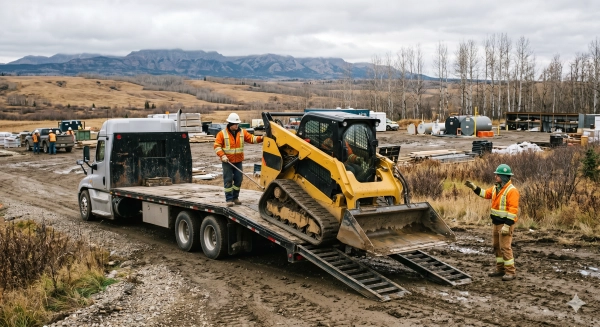
Staff who know both the equipment and actual worksites can assist you in making a selection. For instance, they could guide a mini contractor to a more compact skid steer for tight city sites or suggest high-flow hydraulics if you intend to operate heavy mulchers. They should inquire about soil type, slope, material weight, and space before recommending a machine or attachment.
Transparent pricing pulls it all together. You should get to view transport fees, damage waivers, fuel policies, overtime hours, and any green or cleaning charges all upfront, with no surprise line items on your final invoice. Transparent policies on support calls and after hours assistance count.
| Logistical Service | What It Includes | Why It Matters |
|---|---|---|
| Delivery & Pickup | Scheduled drop-off/collection, routing to site access | Cuts idle time and transport headaches |
| On-site Equipment Guidance | Operator walk-through, control overview, safety basics | Reduces misuse, improves safety and productivity |
| Technical & Breakdown Support | Phone help, field mechanics, swap-out units | Limits downtime when issues appear mid-project |
| Attachment & Sizing Advice | Matching buckets, forks, brooms, augers to tasks | Helps choose right tool instead of over/under-sizing |
Navigating Rental Agreements
Skid steer rental agreements determine what you pay, what support you receive, and who bears risk if something breaks. Transparent conditions allow you to schedule and budget and bypass expensive mid-project surprises.
Understanding Terms
Start by reading the entire contract, not just the per day rate. Verify rental periods, return cut-off times, and overtime pricing. Commonly, rates go for approximately USD 300 to 500 a day, 1,000 to 1,300 a week, and 2,000 to 3,000 a month, but some companies reverse that by packing add-ons into “discounted” monthly packages. Monthly plans can still be more expensive than a combination of daily or weekly rentals if your plans fluctuate.
Request a written inventory of what is included. Maintenance, minor service calls, and normal wear are usually included in the base price, while delivery, fuel, cleaning, and environmental fees lurk in the fine print. Delineate if delivery and pickup are door-to-door or only to the edge of your site. Put each of these on a straightforward checklist so you can evaluate offers side by side.
Confirm the exact skid steer class and attachments you are booking: standard-flow vs high-flow hydraulics, tracked vs wheeled, bucket size, and any add-ons like pallet forks, augers, or sweepers. If you book late during a season, you might only get a different model than you expected or nothing at all. Advance scheduling is critical, particularly for larger work.
Build a quick contract checklist that covers: rental dates and extension rules, base rates by day, week, or month, overtime and standby charges, fuel and cleaning policies, transport in both directions, maintenance and breakdown response, included attachments and their rates, age or license limits (some firms require renters to be at least 18 or 21), and any security deposit or card hold. Renting options that allow you to extend if necessary without penalty can be a lifesaver if your schedule or project scope expands.
Verifying Insurance
Skid steers bring actual danger to any location, so you’ve got to pay attention to the insurance portion of the agreement. Verify it explicitly insures machine damage, theft, and third-party liability, such as bystander, adjacent property, and underground utilities. A lot of companies have a collision damage waiver, but unfortunately it doesn’t cover abuse or unauthorized drivers.
Get it in writing. Ask the rental company to provide you with proof of coverage and a brief document that indicates who pays for what. That file should include excess and deductible amounts, reporting time frames if something happens, and how repair estimates are dealt with. Have this on hand with your project records for supervisors to consult on site.
- Renter responsibilities: * Employ trained, approved operators only.
- Take daily walk-around inspections and log defects immediately.
- Adhere to site safety regulations and load restrictions.
- Bolt the machine down out of hours to prevent theft.
- Rental company responsibilities: * Provide safe equipment in working condition.
- Share manuals and fundamental safety advice.
- Take care of major repairs not resulting from abuse.
- Coverage options: * Normal damage and theft cover with a fixed deductible.
- Extended liability cover for sites that are busy or public.
- Additional theft cover for remote or low-lit locations.
For valuable skid steers or out-of-reach projects, inquire about elevated coverage limits or tying the rental machine into your own business policy. This is important when a one-time loss could be greater than the rental price.
Operator Requirements
A lot of rental companies say in the agreement that only trained operators can operate the skid-steer, and some will request names ahead of time. Make sure to check any age limits or license rules as well. Some providers won’t release equipment unless the signer meets a minimum age, often 18 or 21, and can present appropriate ID. This safeguards you and the company if an accident occurs.
Find out whether the rental firm provides brief operator training, videos or manuals for your precise hire model. Others provide a quick on-site walk-through at delivery, demonstrating controls, lockout systems and safe startup and shutdown procedures. If this assistance is built into the rate, check it off your list. If it’s an add-on, determine if the peace of mind is worth the additional expense.
Regulatory rules can shift by region. For instance, Alberta operators need to comply with workplace safety laws that include pre-shift inspections, use of restraints, and working near edges or trenches. Even if your project is in another area, use similar standards as a baseline: clear training, written procedures, and site-specific risk checks.
Map out your operator roster prior to signing. Pair every shift or project phase with a minimum of one trained operator, along with an illness or schedule-change backup. Renting makes financial sense for industries with fluctuating demand, such as construction because you no longer take out long-term loans on equipment. This only applies if machines remain in use rather than sitting idle because a certified operator cannot be found.
Your Next Project Partner
A solid skid steer rental partner works like an extra crew member: steady, predictable, and there when you need them. It is not just about getting a machine on site; it is about matching the right skid steer and support to the work, the schedule, and the budget.
A reliable Alberta rental source with deep roots in local construction, oilfield and landscaping work adds genuine value here. They’re familiar with winter freeze, spring thaw, soft ground and tight urban lots. This means they inventory machines and attachments that match those real work situations, not a cookie cutter catalogue. When your project shifts or grows, a reliable partner can scale the fleet up or down, rotate units quickly, and get your crews rolling, not stalled.
Reliable skid steers matter most where downtime costs the most, like on oilfield sites and remote jobs. Well-kept units, on-schedule service, and clean maintenance logs slash the risk of mid-shift breakdowns. Rapid deployment is key in these areas: a partner that can stage a tracked skid steer with a brush cutter or auger in hours, not days, helps you hit tight windows between other trades or rig moves. If it’s urban infill work, you could have a compact wheeled unit with a bucket and pallet forks on your site the same morning you sign the order.
With the right partner, you gain genuine choice and control. You’ll find transparent choices on rental period, ranging from one-day gigs up to weekly and monthly rates that tend to provide more value for longer gigs. You need a spread of attachments: buckets, forks, sweepers, augers, breakers, trenchers, and more. A great crew discusses soil composition, grade, and weather, then assists in selecting wheels or tracks to suit. They walk you through the rental agreement line by line, so delivery, pickup, fuel, and damage costs are clear. This is especially important when you compare quotes between providers and rent versus buy. Reviewing your next few quarters’ project load, the proximity to the job site, shipping fees, and how often you actually need that skid steer provides you with an unbiased perspective of what’s the best route.
Conclusion
To sum it up, skid steer rentals provide you with reach and range without long term drag. You fit the machine to the work, not vice versa. For a tight yard in the city, opt for a small frame unit with a bucket. For a rough site and heavy lift work, choose a tracked model with forks or a grapple. You remain lean, agile and transparent on price.
A good rental partner seems less like a vendor and more like support. Transparent rates, easy exchanges, upfront on damage and fuel, and speedy support if stuff breaks. That blend slices tension and maintains productivity.
Got a project on the deck. Contact a nearby lot, tell them your site info, and watch the skid steer that matches your scheme.
Frequently Asked Questions
How do I know if renting a skid steer is better than buying one?
Renting works for short-term or seasonal projects. It sidesteps upfront costs, storage, and maintenance. Buying is great for consistent, long-term use. Measure your project schedule, budget, and machine usage. If you won’t use it weekly all year, rental is typically a better deal.
What types of projects can a skid steer rental handle?
Skid steers are terrific for earthmoving, grading, landscaping, site cleanup, demolition, snow removal and material handling. With the appropriate attachments, one machine can dig, lift, level and load. This renders them handy on construction sites, farms and industrial yards.
What should I look for in a reliable skid steer rental company?
Inspect equipment condition, maintenance records and age of fleet. Verify operator training availability, safety assistance, delivery and insurance advice. Check out the reviews, transparency in pricing and inquire about emergency service. Your partner should be responsive and clear and safety-oriented.
What is usually included in a skid steer rental agreement?
Contracts usually include rental duration, rate per day or week, permitted hours of operation, fuel terms, delivery and pickup charges, and liability for damage. They outline insurance requirements and cleaning standards. Always read the fine print and inquire before you sign.
Do I need insurance to rent a skid steer?
Most rental outfits insist on insurance. You can utilize your own commercial policy or purchase insurance through the rental company. Insurance in general covers damage, theft, and liability. Verify what is covered, what is not, and what your deductible is.
How do attachments affect the cost and performance of a skid steer rental?
Attachments extend what the skid steer can do, such as digging, grading, or sweeping. Each attachment is typically an additional daily or weekly fee. Selecting the right implements makes you more productive and can decrease the total number of rental days, thus decreasing your project cost.
What hidden costs should I watch for with skid steer rentals?
Look out for fuel surcharges, cleanup fees, delivery and pickup fees, over-hour fees, damages fees and environmental fees. Request a detailed cost estimate in writing in advance of rental. Knowing this information keeps your project on budget and avoids billing surprises.
Planning an upcoming oil and gas project? Benoit Rentals provides dependable rental equipment and field support to help keep your operations running safely and efficiently.
Related Wellsite Solutions:
Additional Reference Resource
AOil Production Separators Explained