
- Key Takeaways
- Understanding Alberta’s Containment Mandates
- Beyond Compliance: The True Cost of Failure
- Selecting Your Containment Solution
- The Unspoken Alberta Challenges
- Strategic Rental Planning
- Maintaining Site Integrity
- Conclusion
- Frequently Asked Questions
- What are Alberta’s secondary containment requirements?
- Why is secondary containment so important in Alberta?
- What types of secondary containment systems are common in Alberta?
- How do I choose the right secondary containment for my Alberta site?
- Is renting secondary containment cost-effective in Alberta?
- What unique environmental challenges affect containment in Alberta?
- How can I keep my secondary containment compliant over time?
Key Takeaways
- Alberta secondary containment is an important regulatory requirement ensuring groundwater and the environment are protected from hydrocarbon and chemical spills. Every oilfield site requires engineered solutions like berms and liners that comply with Alberta Energy Regulator and provincial standards. Operators should think of containment as infrastructure, not a nice-to-have addon.
- AER Directive 055 and the Environmental Protection and Enhancement Act impose strict requirements for containment capacity, documentation, inspections, spill prevention, and remediation. Failure to comply can result in fines, legal liability, and loss of operating licenses. Constructing systems and documentation that satisfy these needs diminishes regulatory risk and enables long-term site permits.
- Federal laws like the Fisheries Act and CEPA 1999 can apply where spills might reach protected waters or sensitive habitat, so site design near water bodies or wildlife areas needs extra protection. A consolidated checklist of provincial, federal, industry and landowner requirements offers a project roadmap.
- Selecting the appropriate containment system involves aligning the design to your site’s conditions, climate, terrain and operational requirements. This can include rigid walls, lined earthen berms or portable spill trays. Collaborating with seasoned Alberta-centric suppliers helps guarantee materials, sizing and installation withstand extreme weather, remote logistics and tough ground.
- Forward thinking investment in quality containment, maintenance, and inspections is way cheaper than the environmental scars, cleanup bills, shutdowns, and reputation damage that trail a failure. Routine walkarounds, periodic audits, and trained emergency response teams catch issues early, keeping your operations safe and compliant.
- Good advance planning of rentals, sizing, site preparation and mobilization timelines means operators can have containment in place at the right time and scale for each phase of work. Periodic review and adjustment of containment as projects grow or change keeps compliance and protection current throughout the life of the operation.
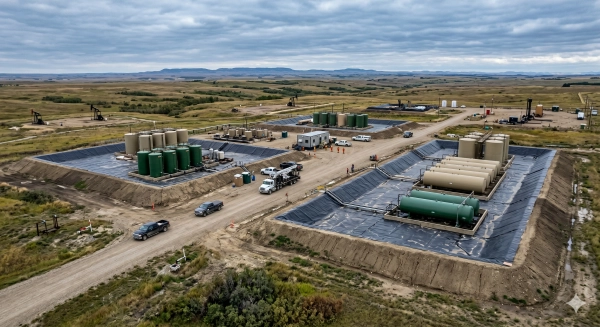
Secondary containment Alberta are the methods and materials implemented throughout the province to capture discharges or seepage from first tanks, pipelines or stockpiles before they enter ground or water. Utilized at oil and gas sites, industrial yards, farms and chemical storage, these configurations typically feature lined berms, double-walled tanks, drip trays and sump systems. Regulations in Alberta stem primarily from the Environmental Protection and Enhancement Act and associated directives that establish explicit design and upkeep requirements. Many of the design considerations focus on volume capacity, leak detection, material strength and weather resistance in cold climates. To help you figure out what applies on site, the primer below walks through key regulations, design fundamentals and typical solutions in more depth.
Understanding Alberta’s Containment Mandates
Alberta’s oil and gas, petrochemical and industrial sites manage immense quantities of hydrocarbons and chemicals daily, so secondary containment is mandatory. It is a fundamental control to contain spills away from soil, groundwater, and surface water and is subject to both AER and wider provincial and federal legislation. Engineered berms, liners, and systems of that nature should be sized, constructed, and inspected to a uniform standard, not just for new projects, but for aging facilities and temporary locations as well.
1. AER Directive 055
AER Directive 055 sets the standard for storage and secondary containment on oilfield sites, including crude oil, produced water, chemicals, and waste. It mandates secondary containment around tanks and hazardous material storage that is structurally sound, impermeable, and maintained free of debris so it can retain liquid in the event of a failure.
The guidance typically requires containment to hold a minimum of 110% of the capacity of the largest single container within a bermed area, plus freeboard for precipitation. That means berm height, slope, and liner selection must be engineered, not estimated, with typical solutions utilizing HDPE or reinforced polypropylene (RPP) liners that can withstand both the stored product and Alberta’s temperature fluctuations. Geotextile fabrics are sometimes laid under HDPE liners to provide cushioning from sharp rocks and prevent the primary membrane from being punctured.
Directive 055 emphasizes record keeping and inspections. Operators must maintain design drawings, liner specifications, installation records, and inspection logs that capture periodic checks, including monthly visual inspections and additional reviews during heavy use or after significant precipitation events. Failure to comply may result in AER enforcement actions, including monetary penalties and even suspension of operations in extreme cases, particularly in the oil sands area where containment failures can impact sensitive wetlands and rivers.
2. EPEA Legislation
Alberta’s Environmental Protection and Enhancement Act (EPEA) establishes the general duty of care for all industrial sites, not just oilfield operations. It obligates operators to stop releases, minimize the dimensions of spills when they do happen, and rehabilitate sites to an approved condition after harm. Under EPEA, secondary containment is a component of a comprehensive spill prevention and response regime, not a standalone characteristic.
Major requirements include engineering containment so it can resist local weather, traffic, and chemical exposure, planning for a spill response, and having reclamation plans that demonstrate how contaminated soil and groundwater would be treated. Secondary containment needs to back those plans by making clean-up more contained and minimizing the dispersion of contaminants. Non-compliance ties directly to operating approvals under EPEA. Inadequate containment design or repeated failures risk licensing and increase legal exposure for environmental damage, including cost recovery for remediation and potential prosecution.
3. Federal Crossover
Federal regulations may apply where a release may reach fish-bearing waters, migratory bird habitat or federal lands. The Fisheries Act prohibits deleterious deposit into water frequented by fish and CEPA can apply to specific toxic substances or waste streams. For sites adjacent to rivers, lakes, wetlands or bird staging areas, these laws overlay AER and provincial requirements.
Designers typically react by providing additional containment volume – higher berms, thicker liners, double-lined cells with leak detection along watercourses. Drainage from bermed areas is contained so that stormwater is tested and controlled prior to discharge. A useful means of handling this crossover is to construct a project-specific checklist that cross-references each storage location with all relevant provincial and federal regulations, such that there are no voids between permit requirements, AER instructions, and federal obligations.
4. Industry Standards
Many operators turn to industry standards and best practices to exceed minimum legal mandates. Oil and gas facility, geosynthetics and environmental engineering groups provide guidance on design slopes for berms, minimum liner thickness, welding and testing of HDPE seams, and inspection intervals. These citations assist in streamlining practices across western Canada and provide audit and due diligence benchmarks.
For Alberta, HDPE and RPP liners backed by geotextiles are ubiquitous throughout tank farms, remote well pads, and centralized facilities since they provide chemically resistant protection and can withstand freeze-thaw cycles when correctly installed and backfilled. Engineered earthen berms are commonly tied into these liners to create integrated systems. Regular reviews of these designs, such as benchmarking performance against top secondary containment providers in the region, assist operators in keeping procedures current as products and standards shift.
5. Landowner Expectations
Particular in farming communities or close to residential areas, private landowners and local communities often anticipate more than the legal minimum. They might demand increased setback distances, more berming or faster clean-up promises in the event of a spill on or near their property.
Well before construction, clear communication about the containment layout, liner types, inspection schedules and emergency response can reduce conflict. Supplying proof of strong design, like drawings that demonstrate 110% capacity, liner details and inspection forms assists in instilling confidence that the site will not cause permanent destruction. For example, some operators memorialize these expectations in written agreements that specify access routes, containment boundaries, noise and traffic limitations and the site’s post-decommissioning restoration, which can be significant should land be reclaimed for farming or other purposes.
Beyond Compliance: The True Cost of Failure
Environmental Scars
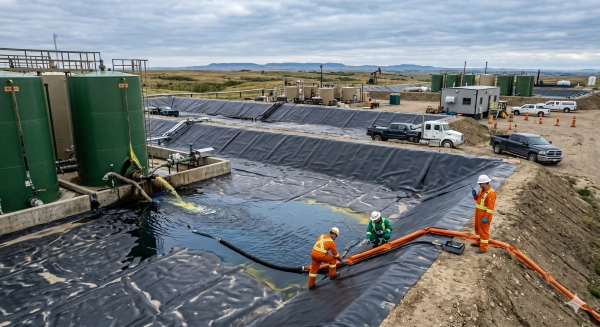
When hydrocarbon or chemical spills breach containment, they can percolate into soil, contaminate groundwater, or flow through run-off into creeks and wetlands. In Alberta’s frigid winters, pollutants can remain trapped in frozen soil and then shift once more when it thaws, dispersing the damage. The consequence is persistent stress on plants, wildlife, and sometimes local water consumers.
Cleaning up a contaminated site after a berm or liner gives out is a slow, costly process. Crews might have to dig up huge amounts of soil, treat or swap it out, and monitor groundwater for years. For instance, a small tank leak that goes unrecognized one winter can necessitate a multi-season remediation program with drilling, sampling, and lab work, often costing many times more than a robust secondary containment system would have.
Robust secondary containment and liners provide a safety net, intercepting small leaks before they become a visible environmental blemish. They contain the blast of a wider release should a tank or hose burst without warning.
When a spill reaches open ground or water, it typically results in increased regulatory attention, more inspections and public worry. That added care can persist well beyond the dirt is paper clean.
Financial Penalties
Breach containment may generate fines, regulator-led response cost recovery fees and additional reporting obligations. These costs pile on top of remediation, legal assistance and the worth of lost product. Even a brief incident can erase the savings from skimping on liners, berms or inspections.
Oil and gas, construction, and chemical processing operators enjoy a transparent cost-benefit perspective. When they price containment options, they should model probable penalties, possible downtime, and long-term monitoring costs. Insurance can assist, but most underwriters are now looking closely at things like secondary containment design, materials compatible with stored products, and evidence of regular inspection and maintenance before offering favorable terms.
Operational Shutdowns
If a secondary containment system fails in Alberta, regulators can mandate an immediate partial or total shutdown as cause, extent and risk are examined. That downtime can stop drilling, processing, or loading operations, and the lost output in a matter of days may be higher than the cost of a top liner system that can withstand extreme temperature variations.
Ripple effect through the supply chain. Contractors are waiting, haul slots are missed, and planned work at adjacent sites might have to come to a halt. For industries that depend on consistent flow to fulfill contracts, even a brief hold can undermine business relationships.
Dependable secondary containment, constructed of materials compatible with the stored chemicals and the local climate, is at the core of maintaining operations. Checking berm integrity, liner wear and sump capacity on a regular basis minimizes the possibility of a sudden failure that forces a stop. In addition, clear, drilled response plans help cut the length of any shutdown that does occur.
Reputational Damage
A containment failure with clear visual evidence can swiftly turn regulators, landowners, and local communities against an operator. Headlines with oily water or stained soil on them travel a long way, and the story often extends beyond the technical specifics. This loss of trust can make it more difficult to attract new tenants, collaborate with local merchants, or receive backing for future initiatives.
Over time, recurring problems or a single major event can cause lenders, investors, and insurers to categorize a firm as increased risk. That can increase borrowing costs or delay access to capital, even if the site has been remediated and certified. Negative coverage molds how workers perceive the company’s safety culture, which can impact retention and hiring.
On the other hand, a transparent demonstrative dedication to quality secondary containment—solidly constructed berms, liner compatibility, routine maintenance, and transparent inspection disclosures—backs up enhanced community relations. When operators share samples of good spill prevention or examples of quick, well-managed response, they’re backing up their CSR talk with tangible evidence rather than broad platitudes.
Selecting Your Containment Solution
Secondary containment in Alberta must balance genuine site hazards, severe climates and tough regulations. Selection of system should come after what you store, spill volume, soil conditions and equipment traffic, not brand loyalty or current trends. For large and/or complex projects, a lot of operators go with one-stop shops that manage design, fabrication, installation, expansion and repairs throughout Bonnyville and Grande Prairie.
| Containment type | Best use cases | Typical wall height range | Key strengths |
|---|---|---|---|
| Rigid wall systems | Tank farms, truck loading, heavy equipment bays | 0.35–1.7 m (14–68 in) | High strength, cleanable, fast to deploy |
So, choosing your containment solution
- Lined earthen berms
- Large, long-term storage, remote pads
- 0.6 to 1.5 meters
- Low unit cost, scalable, good for big volumes
| Portable spillage trays | | Portable equipment, temporary fueling and chemical sites | | 0.15 to 0.4 m | | easy to deploy, collapsible, fast to deploy |
| Tank farm systems. | Multi-tank, multi-product facilities | | 0.6 to 1.7 m | | Designed for worst-case failure and drainage |
Choosing between these involves balancing regulatory containment requirements, product type (crude, fuel, chemicals, produced water) and the project’s value and uptime requirements. As your fields grow or shift, modular and scalable designs reduce downtime, and custom engineering eases adding new tanks or meeting new codes. Across oil and gas, power generation and other industries with secondary containment, the trend is toward turnkey systems that utilize the latest liner materials, connection hardware and leak monitoring options for extended, dependable service.
Collaborating with seasoned containment vendors assists in converting these decisions into a specific design that adapts to local regulations and prevailing field circumstances, not a one-size-fits-all pattern.
Rigid Wall Systems
Rigid wall containment covers steel berms, aluminum frames and modular wall panels that interlock around tanks, transformers or maintenance pads. These systems provide high mechanical strength and bear heavy loads from trucks, stacked totes or large aboveground storage tanks. Walls are typically between 0.35 m and 1.7 m in height and can be sized for small generator sets to fuel tank farms.
Typical applications include permanent fuel tank arrays, heavy equipment service bays, chemical transfer, and electrical power locations where transformer oil must be contained to prevent soil or groundwater contamination. Most operators choose rigid walls if they have bad ground conditions or if they require a flat, cleanable floor like a steel or composite base.
Cleaning is generally straightforward, as the surfaces are smooth and accessible, and recovered product and wash water can be pumped out immediately. Modular steel berms can be erected or relocated in small windows, which fits shutdowns, mobile drilling assets or squeeze-timeline expansions.
When it comes to containment solutions, lifecycle cost is a much bigger deal than upfront sticker price. Rigid systems might be pricier up front, but less upkeep, reduced erosion potential, and quicker cleanup can compensate for this across years of use. A side-by-side comparison with lined berms or portable units, inspection, repair, and life span provides a more transparent perspective.
Lined Earthen Berms
Lined earthen berms begin with on-site soil shaping and compaction, usually incorporating clay cores or imported fill. An impervious liner is subsequently included, usually an HDPE liner or other geosynthetic membrane, to prevent leakage.
Effectiveness is based on compaction quality, subgrade prep, liner integrity and seam welding. If you have poor welds, wrinkles, or unprotected liner areas, they become slow leaks that are difficult to detect. Most sites install geotextile underlay and occasionally a thin gravel cover on top to protect the liner from puncture.
These berms are best for large storage, think multi-tank crude pads or produced water tanks that will remain stationary for years. They usually cost less per cubic meter of containment volume than rigid walls once the footprint is large enough.
Inspection is never done. They inspect for erosion on outer slopes, UV wear or tears in exposed liner zones, animal damage and berm settlement that diminishes effective height. Regular walk downs after heavy rain or freeze-thaw cycles ensure that the system remains within design capacity.
Portable Spill Trays
Portable spill trays address mobile and brief work, such as fueling small vehicles, placing chemical totes next to a rig, or setting a small pump unit with leaky hydraulic lines. They fold or stack for shipping, which is great for drilling and completion programs that move frequently between leases.
Easy to install – dozens of trays can be installed by one or two laborers with no heavy equipment. This velocity is handy in kinetic work where fronts shift on a daily basis and containment has to keep pace.
Materials like high-density polyethylene or coated steel resist fuels, lubricants, and many typical oilfield chemicals. For more aggressive products, consulting chemical compatibility charts with the tray supplier prevents premature failure.
A number of crews utilize spill trays as an additional buffer beneath hoses during transfer, filter pods during change-out, or temporary generators. This layered approach reduces the likelihood that a small leak bypasses the primary containment and reaches the soil or snow.
Tank Farms
Alberta tank farms, be it crude oil, fuel, chemicals, or produced water, have their own set of secondary containment requirements related to worst-case failure scenarios. Design typically assumes total loss of the largest tank plus a margin for other leaks and freeboard for rain and snowmelt.
Volume capacity and wall height to match product hazard, number of tanks and local rainfall patterns. Heights of 0.6 to 1.7 meters are typical, but the real impetus is the cubic meters of net storage needed after accounting for internal equipment and sloped floors.
These systems can be combined with impermeable liners, bermed or walled perimeters and rainwater management like sumps, controlled discharge points or oil-water separation. Without this, storm events can drive water levels high enough to jeopardize overtopping.
Since projects are different, a lot of operators opt for custom configurations that take into consideration manifold configurations, fire access roads, and expansion areas for additional tanks in the future. Continued monitoring of berm integrity, liner conditions, drain valves, and freeboard available maintains the life of the farm and keeps it compliant and effective. A provider that can design, build, maintain, and later expand the farm’s containment often minimizes coordination gaps and accelerates upgrades.
The Unspoken Alberta Challenges
 Secondary containment in Alberta is about wrestling with real-life constraints, not textbook scenarios. Operators transport and warehouse massive quantities of harmful substances on a daily basis from hydrocarbons and produced water to drilling fluids and fertilizers at oil sands sites near Fort McMurray as well as vast prairie farmsteads. A small leak of one drop per second can add up to around 900 liters of fuel in a year, so a missed design or maintenance detail can translate into a slow, invisible spill. Those dangers hover above a convoluted regulatory environment that frequently changes, rendering local knowledge and meticulous planning almost as essential as the equipment itself.
Extreme Climate
Freeze-thaw cycles, long cold snaps, and sudden warm spells exert constant strain on berms, liners, and steel walls. Water finds its way into small crevices, freezes, expands, and leaves wider cracks upon thaw, which can degrade HDPE liners, geotextiles, and RPP if they were not selected or installed for these fluctuations. Heavy rain or fast snowmelt can flood containment zones, test drainage systems, and nearly overwhelm earthen berms.
Material selection has to correspond to these realities, not a generic specs sheet. In Alberta, that often translates to UV-stabilized HDPE liners, heavy-duty RPP for higher temperatures or complex shapes, and a subgrade pillow of non-woven geotextiles to shield liners from sharp subgrade or thermal movement. Coatings on steel tanks and walls need to withstand both freezing temperatures and de-icing salts and be simple to inspect and repair.
Maintenance and winter prep are as important as original design. Frequent membrane, welded seam, drainage valve and berm integrity inspections help detect damage from ice, snow clearing and ground shifting. Basic proactive steps like clearing ice away from sumps, checking for heave around posts and testing drains prior to freeze-up can prevent a small problem from turning into a spill!
For year-round use, certain locations supplement with insulation skirting, heat tracing for drains or heated utility sheds so valves and monitoring equipment continue functioning in mid-winter. They might add initial expense, but in the long run, they will help prevent freeze-caused breakdowns and lower spill cleanup costs.
Remote Logistics
Getting to a remote lease road or winter-only site is more than calling a truck and crane. Access could be determined by a brief seasonal window, weight restrictions on ice roads, or tight rights-of-way, so every shipment of liner, geotextile, or structural steel counts. Any delay or missing portion leaves toxic substances in storage without adequate secondary containment for longer than intended, which increases both hazard and regulatory stress.
Pre-planning helps keep that risk in check. This typically translates to securing road and load limit approvals well in advance, booking local earthworks crews in advance, and pre-staging key things like HDPE welders, fuel, and spare liner patches on site. Where helicopter or off-road haulers are required, designs have to hit those limits from the start.
Modular and lighter systems really make a difference for these locations. Things like bolt-together steel walls with rolled liners, generator or chemical tote portable framed berms, or sectional tanks that ship in smaller pieces. These units are faster to set up, can be moved or expanded as drilling or production shifts, and frequently reduce heavy equipment hours.
In these remote locations, a provider with full service and rapid response is not a luxury. It can mean having a crew that understands local weather, access routes, and regulatory expectations, and can get to site fast if a liner tear or berm slump pops up during an inspection. That lethal combination of design, installation, and ongoing service support can reduce both spill risk and long-term cleanup costs.
Unforgiving Terrain
Some of Alberta’s best sites rest on rocky soil, glacial till or hillsides where level space is at a premium. Sharp rock can puncture liners, uneven ground can create stress points in berms and walls, and tight pads around existing pumps or tanks can constrain standard layouts. These factors determine how secondary containment has to be constructed if it is going to contain the full volume of a potential leak as required in numerous regulations.
Site inspection is not an afterthought, it is the beginning. That typically translates into test pits, subgrade proof-rolling and mapping of high spots, soft pockets and drainage paths prior to finalizing design. Earthworks could consist of rock removal, compaction and sand or screened fill under geotextile and liner to provide a smoother base.
Custom-engineered solutions tend to work better than trying to shove a standard ring or berm onto a bad fit. Examples include stepped or terraced berms on slope faces, concrete curbs with liners for tight equipment yards, or divided containment cells wrapping around existing infrastructure. These designs could help divert clean stormwater away from polluted areas.
Anchoring and stabilization are the secret sauce for long-term dependability. On sloped or windy sites, walls may require ground anchors, deeper footings or tie-back systems so they don’t move even when filled with water. Earth berms might need softer side slopes, erosion control mats and plants to hold them together during storms and snowmelt. Executed properly, they facilitate compliance and reduce cleanup costs should a spill occur.
Strategic Rental Planning
That strategic rental planning for secondary containment in Alberta aligns rented systems to the actual risk profile of each site and not just the budget. Operators view short jobs, such as a 3-month well workover, very differently than multi-year production, yet both require compliant spill control. Rent instead of buy to eliminate upfront capital, storage, and long idle time, which is very handy when tanks, frac setups, or transfer lines change frequently. In Alberta’s oil and gas and agricultural sectors, this planning aids environmental objectives by cutting waste and preventing overbuilt, underutilized equipment.
A good plan begins with usage. Strategically plan the rental map for when and where tanks, totes, and process units are on-site. Then schedule containment rental durations accordingly to reduce downtime. Such planning should account for equipment availability, lead times, and seasonal demand swings, like spring drilling peaks or harvest. It assists operators in responding to unexpected occurrences, like extreme weather, flooding, or emergency repairs, without having to scurry for last-minute containment.
For the majority of short-term projects, it’s more economical to rent than to buy, particularly when codes or site configurations are frequently revised. Buying can work for big, steady facilities, but most projects benefit from strategically renting a combination of berms, liners and portable walls sized for each project stage. Periodic testing and maintenance performed by the rental provider or by trained on-site personnel remain essential to keep equipment secure and to identify wear before a breakdown.
Having one vendor that provides a broad base of solutions and technical assistance provides more control. Teams can receive assistance with engineering inspections, layout schematics, and compatibility inquiries across fuels, produced water, chemicals, or fertilizers. Syncing short and long-term rental to project schedules and mobilization plans keeps containment in place before that first drop of product hits the floor and until that last container rolls out the door, boosting compliance and reducing spill risk.
Accurate Sizing
- Tank, tote or vessel – list with volume in cubic meters.
- Note the largest single container and its capacity.
- Determine what they store and the most stringent Alberta regulation that applies, such as a minimum of 110 percent of the largest vessel or a percentage of total volume.
- Calculate required containment volume using both rules: 110% of the largest single container and a set fraction of combined volume for all containers.
- Include freeboard for rain and snow melt according to local weather information and site drainage.
- Verify available on-site space and modify layout to maintain needed volume without blocking access.
- Validate the design with the rental provider’s engineering team and record the assumptions.
A basic internal table of sizing rules helps keep decisions consistent. For example, one column for “diesel tanks at remote leases,” another for “frac tanks with produced water,” and another for “chemical totes at plant yards,” each with minimum berm height, liner type, and target containment volume. Under-sizing raises clear risks: non-compliance with Alberta requirements, higher spill spread if a wall fails, and greater cleanup cost if weather or operator error add to the release.
Containment requirements evolve as projects expand, swap fluid types, or introduce additional equipment. Periodic re-evaluation at a minimum each major phase or scope change ensures rented systems continue to align with tank count, volumes, and new standards.
Site Preparation
Site prep lays the foundation for any rental containment system, be it a steel‑walled berm or flexible liner. Crews remove debris, rocks, and sharp objects and then grade and compact the soil to provide a flat, stable pad. Soft spots, voids, or old trenches need to be patched, as they result in uneven support and stress on the containment walls.
After that, the ground stability and drainage must be considered. The pad ought to sustain full loads from tanks and trucks without rutting, and surface slopes need to drain external stormwater away from the containment and prevent external flows from breaching the berm. Many operators install a shallow perimeter swale or raised edge outside the berm to direct rainwater.
Access is site prep. There should be well-defined safe ways for delivery trucks, cranes, and vacuum units with sufficient turning radius and no overhead clashes. Emergency crews need to access the containment area quickly with fire, spill, or medical equipment even during foul weather or in low light.
Planning your rental strategically and scheduling some of the prep work with the rental provider’s engineering team increases the likelihood that everything fits the first time. Shared drawings, traffic flow sketches, and ground bearing checks all help avoid rework and keep rented equipment on site for the shortest useful period, which is good for cost control.
Mobilization Timeline
Mobilization planning connects secondary containment to the primary project milestones so operators don’t mobilize product ahead of secondary defenses. Schedules need to indicate when civil work, containment install, tank delivery, and first fill occur and connect each step to a defined sign off or inspection point.
Strategic rentals — lead time matters. Rental companies require this lead time to secure availability, relocate equipment, build scaffolds and test for leaks and quality. Lead times can stretch, so ordering earlier can protect both compliance and cost. Seasonal demand peaks in Alberta, like a robust drilling or turnaround season. Strategic rental planning involves constructing a mobilization schedule with float for weather holds and transport delays. This is one of the more straightforward ways to keep projects on schedule and avoid fines or hurried, non-compliant setups.
Partnering with a reliable on-time deployment provider can lower risk. A few operators schedule joint pre-mobilization reviews, where they jointly go over weather risks, regulatory updates, and any special fluids or job pressures. This type of strategic rental planning, when executed well, aligns safety, environmental responsibility, and budgets in an efficient manner for both long and short term jobs in Alberta.
Maintaining Site Integrity

Site integrity in Alberta secondary containment is maintaining systems sound day after day, not just at install or audit. Secondary structures have to securely contain at least 110% of the capacity of the largest individual tank, and they only accomplish that if berms, liners and valves remain intact in real-world field conditions, including freeze-thaw cycles and severe storms.
Daily Walkarounds
Daily walkarounds keep issues small. Crew ought to sweep berms, liners, tanks, hoses, and flanges for wet spots, stains, sagging walls, frost heave, or moved equipment. Any grade change or pooled water within a berm or exposed liner edge can foreshadow a leak.
All findings must be logged, even if they appear trivial. Notes on wear, corrosion, or stress cracks in welded seams assist in tracking patterns over time. If a valve drips one day and the next it is worse, the log records it and supports faster repair.
A straightforward checklist makes walkarounds regular. It can include: berm walls (earthen slumps, erosion, tire ruts), liner surface (tears, punctures, UV damage), membranes and seams, non‑woven geotextile exposure, tank bases, drainage valves, and nearby ditches. Consider weather-related impacts like snow or ice load that can push against containment walls.
Early detection is the objective. Catching a pinhole leak in an HDPE liner or a loose flange gasket during a daily round is significantly less expensive and more convenient than contending with a breached berm and contaminated soil.
Scheduled Audits
Daily checking requires support from scheduled audits. A lot of sites operate on a foundation of monthly visual inspections, along with additional passes during high usage times or after spring thaws, heavy storms, or flooding that can strain earthen berms and drainage systems.
These audits go deeper by reviewing past logs, repair records, and test reports. They inspect membranes, welded seams, drainage valves, and geotextiles. They confirm that containment volume still meets the 110% rule after any layout change. This is when teams double check chemical compatibility of liners, whether HDPE, Reinforced Polypropylene (RPP), or composite systems, and verify they continue to manage the stored products and Alberta’s wide temperature fluctuations.
Bouncing in third-party inspectors or certified liner technicians introduces an impartial perspective. They can check seam testing, inspect non-woven geotextile that cushions rocky soil, and catch design constraints that in-house personnel might overlook. Frequent, transparent audits plug compliance holes before regulators or mishaps plug them for you.
Emergency Response
Emergency response planning starts from a clear set of steps for spills, liner tears, or tank failures: stop the source if it is safe, contain the liquid within the berm or using portable barriers, protect storm drains and surface water, then report and clean up in line with local rules. These actions need to take into account site layout, product types, and any Alberta specific conditions, such as frozen ground altering liquid migration.
Spill kits, absorbents, portable booms and firefighting gear need to be accessible, not locked up or buried in back stock. Communication tools, contact lists, and clear roles keep people from wondering who calls regulators, who shuts valves, and who leads cleanup. All of this should be documented and available in locations employees really access.
All workers who enter the containment area require training on these plans and how the containment system operates in practice. That covers essentials such as how to close drainage valves, how to inspect liner damage without exacerbating it, and how to navigate non-woven geotextiles and membranes during cleanup.
Working quickly and efficiently contains soil and water exposure and minimizes regulatory and cost repercussions.
Conclusion
Secondary containment Alberta isn’t just a checkbox. It forges real risk, real cost and real trust with regulators and adjacent communities. A good plan slashes spill clean up bills, keeps work on track and removes stress from your team. Intelligent lease agreements and consistent location inspections protect your team and equipment in brutal freeze and thaw cycles.
A clean run assists most yards. Map your regulations, site restrictions, product mix, season, and budget. Then tailor equipment and lease conditions to that scheme, not vice versa.
For your next Alberta project, consult with a provider who understands local regulations, soil conditions and weather. Demand specific numbers and develop a plan that you believe in.
Frequently Asked Questions
What are Alberta’s secondary containment requirements?
Alberta needs secondary containment for a lot of fuel, chemical, and wastewater storage. Regulations are centered on preventing soil and water contamination. Depending on volumes, products, and location, different requirements apply. Always check with the AER and local environmental regulations before establishing a site.
Why is secondary containment so important in Alberta?
Secondary containment decreases spill risk, safeguards groundwater, and assists in compliance with stringent Alberta regulations. It sidesteps cleanup expenses, penalties, and closures. In key locations, smart containment is the difference between a small leak and a huge environmental and economic impact.
What types of secondary containment systems are common in Alberta?
Typical systems include portable spill berms, lined earthen berms, steel containment walls, and modular liner systems. Selection is based on the product stored, site conditions, footprint, and project duration. Many operators rent systems to remain nimble and contain costs on short or seasonal work.
How do I choose the right secondary containment for my Alberta site?
Begin with compliance, product, and storage volume. Then evaluate soil, weather, and access limitations. Consider permanent versus rental options, installation time, removal costs, and more. Partner with a trusted containment provider who knows Alberta’s standards and inspection insiders.
Is renting secondary containment cost-effective in Alberta?
For temporary, remote or project-based sites, renting can be very cost effective. It cuts upfront capital, accelerates mobilization and sidesteps long-term maintenance and storage. Our rental partners can assist with design, installation and compliance, reducing the risk of expensive errors or regulatory hold ups.
What unique environmental challenges affect containment in Alberta?
Alberta sites deal with freeze-thaw cycles, heavy snow, fickle soils and isolated access. These conditions strain liners, berms and joints. They must withstand extreme temperatures, uneven ground and minimal site services. Adequate design and inspection prevent leaks and structural failures.
How can I keep my secondary containment compliant over time?
Check containment weekly for tears, settlement, corrosion, and freeboard issues. Drain standing water, control snow and ice, and restore damage fast. Document inspections and service. Train your site staff on spill response. A periodic review with a containment specialist helps you ensure compliance continues.
Need more information for your next oilfield project? Discover additional equipment and wellsite support solutions offered by Benoit Rentals Ltd.
Additional Reference Resource
Oil Production Separators Explained