
- Key Takeaways
- Winter Environmental Challenges
- Technology Performance Comparison
- Select LED Light Towers
- Strategic Fixture Placement
- Total Cost Analysis
- Winter Fleet Rental Solutions
- Conclusion
- Frequently Asked Questions
- How do LED light towers perform in extreme winter conditions?
- Why choose LED light towers over metal halide in winter?
- How should I place LED light towers for safe winter work zones?
- Are LED light towers cost-effective for winter rentals?
- What winter features should I look for in LED light tower rentals?
- How do LED light towers impact the environment in winter?
- Can LED light towers support large winter sites or events?
Key Takeaways
- Led light towers provide dependable illumination for long winter nights and they are equipped to deal with freezing temperatures, snow and blustery winds with their rugged build and coated exteriors. This keeps remote industrial and oilfield sites safe and productive with as little downtime as possible.
- Relative to old-school diesel lighting towers, LED versions generate more light with less energy and fuel or battery usage. They usually offer lower operating costs, less emissions, and less noise to the worksite and surrounding area.
- Energy-efficient LED towers with smart controls, hybrid or battery, and extended runtimes minimize refueling or recharging. Opting for cold-durable, low-maintenance models ensures that winter operations stay up and running.
- Optical clarity and proper lumen output are a must for safe work, particularly in snow and low-light conditions. We’ve included some easy to read tables comparing lumens, coverage, and runtime by model to help you better match the right tower to each project.
- A systematic decision tree that considers site size, power availability, portability, lumen requirements and run-time ensures more effective illumination and less dead zone. Careful site mapping and fixture placement foster safer foot traffic, unobstructed emergency pathways and optimal tower utilization.
- When you look at total cost over the entire project life, including fuel, maintenance, downtime, and emissions, LED light towers generally come out ahead. Winter-ready rental solutions, as provided by specialized providers, enable operators to tap into rugged, customizable LED fleets without significant upfront investment.
LED light towers are mobile lighting units that utilize energy-efficient LED lamps to provide intense, broad-area illumination for work sites, events, and disaster zones. They typically operate on diesel, hybrid, or battery power and are capable of illuminating large outdoor areas for extended periods of time with minimal fuel consumption. Most come with extendable masts, wheels or trailers, and ruggedized frames, so they adapt to uneven terrain and shifting site requirements. LEDs provide extended lamp life, minimal maintenance, and less heat than metal halide or halogen fixtures. In actual practice, they appear at highway work zones, construction yards, athletic fields, and emergency zones. The next sections walk through features, types, and tips to choose the right tower.
Winter Environmental Challenges
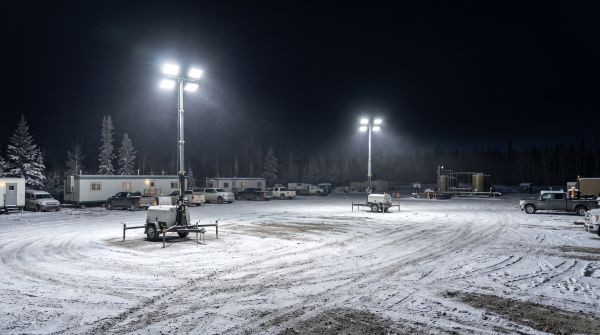
 Winter work in places with long, dark seasons — Alberta oilfields and other industrial sites — presses light towers to the limit. Crews are used to normal shifts and suddenly they’re working nights and the sun is only up a couple of hours. That shift translates into additional time when the location is utilizing synthetic lighting for essential vision, gear inspections, and safety strolls. A light tower that’s fine on a short evening shift can give out or run out of fuel halfway through a 12-hour night in open terrain. On drilling pads, pipeline right-of-ways, and plant turnarounds, this can slow down work, increase the risk of slips and trips, and inhibit visibility for supervisors to monitor what’s actually occurring on the ground.
Freezing temperatures and fast‑changing weather put LED light towers through the ringer. Cold air does a number on fluids by thickening them, kills batteries and can make diesel units difficult to start. At −20 °C or below, cabling stiffens and plastic parts might break if they aren’t manufactured for that realm. Snow and ice accumulation on outriggers, steps, and service panels can cover trip hazards or prevent access to emergency stops. Blowing snow diminishes light dispersion and clings to fixtures and lenses, decreasing output just when crews need it most. A sunny, dry evening can become wet snow and high wind within hours at many Alberta sites, so towers require stable masts, secure tie‑downs and safety interlocks that prevent the mast from being raised in unsafe wind.
As a result, winter-ready towers often feature sturdy steel frames, corrosion-resistant paint and sealed electrical housings. Powder-coated exteriors resist road salt, slush and freeze-thaw cycles better. Rugged fenders, reinforced doors and lockable latches keep parts from bending or icing open. Sophisticated safety systems, including tilt sensors, automatic shutdown on low oil pressure and alarms for high wind or over-temperature, help ensure units are safe even when crews are occupied with mission-critical work and not monitoring each tower.
Distant industrial sites likewise demand extended runtimes and minimal maintenance. Towers with fuel-efficient or hybrid engines can operate for multiple nights on a single tank, reducing trips to refill over icy roads. LED fixtures have a longer service life than many legacy lamps, so there are fewer bulb changes in sub-zero weather. Convenient service points, transparent labels, and large access doors enable mechanics to perform checks with gloved hands and tools that are easy to transport in winter gear. This reduces downtime, reduces additional travel to and from camp, and keeps campsites illuminated even during extended cold snaps.
Lighting plans should provide enough illumination for workers to perform tasks safely, protect light sources from damage, and include emergency lighting where a failure of normal lighting could put workers at risk; these requirements are addressed in Alberta’s Occupational Health and Safety Code
Technology Performance Comparison
LED light towers now sit adjacent to traditional diesel units in most rental yards and project tenders, so it’s reasonable to compare them side by side on output, efficiency, durability and operating costs, not just price.
Energy Efficiency
LED towers provide more functional illumination per watt than metal halide or halogen towers. In some cases, they reduce power consumption by as much as 55% and still achieve lumen counts that satisfy job-site regulations. A typical LED tower with four 160 W heads produces 120,000 to 160,000 lumens and covers 5,000 m². A metal halide tower could be consuming more than twice as much power to achieve the same or lesser output.
Less power draw leads to smaller engines, less fuel burn, or a full battery. Hybrid diesel-battery units can run LEDs at low load through the night, then top up the bank during short engine cycles. That reduces idle time and conserves fuel on long shifts.
Smart energy management systems assist. Timers, ambient-light sensors and remote start/stop can shut towers off when light isn’t needed, trim output in low-risk zones and stagger start up across large fleets so generators keep within capacity.
| Tower type | Energy use (kW) | Typical runtime per tank/charge | Fuel/battery need per 10 h |
|---|---|---|---|
| Metal halide diesel | 4–6 | 40–55 h | 25–35 L diesel |
| LED diesel | 1.5–3 | 70–100 h | 10–18 L diesel |
| LED hybrid/battery | 0.8 to 2 | 16 to 24 hours (battery alone) | 0 to 8 liters diesel |
When you spec towers, construct a similar table for the actual models you compare with rated energy draw, real runtime tests, and typical site duty cycles.
Cold Durability
LED lighting is less sensitive to temperature swings than metal halide, which comes in handy on winter work where temperatures can jump from thaw to deep freeze in a single day. Solid-state LEDs don’t require warm-up, so they’re at full output even in sub-zero conditions, with no color shift and no flicker in snow or sleet.
Cold weather toughness isn’t about the beam. A quality LED tower combines sealed LED modules with a rugged frame, sturdy hinges and powder-coated steel or aluminum to resist corrosion from road salt and wet slush. Cable runs should be shielded, and connectors should be rated against moisture and ice buildup, so vibration and freeze-thaw cycles do not crack housings.
Hydraulic telescopic masts assist in this. They lift and depress under load, lock in position at elevation, and stabilize the beam in gusty wind, which counts in open mine pits or highway work. Overload valves, tilt sensors, and emergency stop systems protect the mast and head assembly when ice, wind, and rough terrain all strike at the same time.
LED towers generally require less cold-weather maintenance. With no fragile bulbs to change and fewer moving components in the light head, crews can concentrate on simple engine maintenance and mast inspections, decreasing downtime when winter access is sluggish and call-outs are more expensive.
Optical Clarity
Light quality is just as important as simple lumen counts. LED towers reach high lumen output for their watt draw, so they can illuminate haul roads, rail yards, and staging areas in snow or fog. A lot of floodlight types boast in excess of 30,000 hours of helpful life on heavy-responsibility cycles, and some hit 50,000, which would be years of night labor ahead of lumen depreciation pushing them under 70 percent of their original worth.
High CRI is another benefit. Most LED heads operate at CRI greater than 85, which is near daylight. That aids employees in distinguishing color codes on wires, deciphering cautionary labels, and identifying surface imperfections, even when the floor is damp or semi-iced. It lessens eye fatigue for those late nights.
For planning, teams can then correlate lumen output to coverage area and target lux (light on the ground). One high-end LED tower could output 120,000 lumens and securely cloak approximately 5,000 m² at around 20 to 30 lux average for general work. Tighter layouts, such as equipment repair pads, might require elevated lux and shorter tower distances. When you compare models, consider lumens, coverage diagrams, mast height, and site layout in combination, not standalone specs, so you align optical specificity with actual work rather than marketing speak.
Maintenance Demands
Maintenance is one of the more obvious divides between LED and conventional towers. Metal halide lamps can be damaged by shock, cold starts, or plain old wear and tear, which translates into routine bulb and ballast inspections. LEDs have solid-state drivers and sealed heads, so you skip most of those visits and spare parts inventory that follows.
Long anticipated lifetimes alter the equation. Some LED lamps remain operational well past 30,000 hours, nearly a decade of normal field use. This translates to significantly less mast climbing, lock-out downtime and interruptions to workflow on remote or high-risk locations.
Well‑engineered LED diesel towers still rely on rugged fundamentals like steel fuel tanks, fuel efficient Tier‑rated engines and convenient service access points. Others tack on remote monitoring through smartphone or web apps, which display fuel level, runtime, alarms and location. It is about technology performance comparison, which helps schedule service runs and identify problems before they shut down work.
Long runtimes per tank, paired with rugged frames and sealed wiring, reduce the frequency with which crews must refuel or service machines in remote or challenging locations. To help make fleet decisions transparent, several operators follow maintenance intervals, spare part spend, and unplanned downtime per model, then compare LED and metal halide towers for at least one full season.
Select LED Light Towers
The choice begins with the work, not the brochure. Tailor towers to site size, risk, shift length and power access. LED models have a higher initial price, but they can run well beyond 30,000 hours in heavy-duty environments, reduce fuel consumption by as much as 60 percent and require less maintenance than metal halide versions. Concentrate on light coverage area, average lux, power requirements, beam spread and color temperature of approximately 5000 K for work zones and approximately 4000 K for public or event areas.
1. Assess Area
Start with a basic site map. Designate work areas, traffic paths, inventory, and the public entrance. Flag blind corners, overhead hazards, and wherever people work at heights or around moving machinery.
Take the total surface in square meters and mark areas that remain shadowed like behind containers, plant rooms or scaffolds. Those are typically where accidents occur, so schedule additional coverage there.
In complicated layouts, hydraulic telescopic masts assist a great deal. Adjustable mast and swivel heads raise and lower the mast and swivel heads to clear obstacles, change angles, and reach into tight spaces without repositioning the base unit.
Select LED Light Towers A higher mast and tight optic help for long, open stretches like road work. A low mast and wider beam play well in compact plants or crowded yards.
2. Check Power
Check which sources you can rely on: grid power, diesel, battery, solar, or a mix. A lot of sites opt for hybrid LED towers that top off batteries from a mini diesel engine and, if possible, solar cells.
Battery ranges fit well in cities, night work near residences, or indoor and tunnel work as they operate silently and clean. Diesel engine models still have a place for those long shifts in remote, high-demand jobs where you need long run-time and easy refills. Check normal plugs and any third-party connection possibilities so towers can hook into existing generators or site power securely.
For sites without reliable grid access, portable generators and light towers can provide the power and illumination needed to support remote construction, oilfield, and industrial operations.
3. Verify Lumens
Check lumen output, not just wattage. Make sure each tower can provide the lux level your safety protocol or local standards require. Build in a buffer for foul weather or dusty atmosphere. Construct a quick chart with each model’s lumens, coverage, average lux, application notes and draw so you can compare apples to apples.
For industrial sites or mining pits, rely on high-output LED towers with powerful optics and beam control, because they have to illuminate wide areas from fewer locations. LEDs with a CRI above 85 enable individuals to clearly perceive colors and markings, facilitating more efficient and secure work processes. Consider adjustable output or dimming so you can turn lighting down for standby times and up for critical work, conserving energy and fuel.
4. Inspect Mobility
Determine how frequently towers must relocate. For road work that ‘chases’ the crew, events, or shifting laydown yards, mobile LED towers with tow hitches, forklift pockets or skid bases typically make more sense than fixed units.
The compact designs reduce setup time and perform better in cramped city or construction environments where turning room is minimal. Rugged wheels, reinforced frames, and lighter yet strong structures come in handy on uneven terrain, soft ground, or temporary access roads.
So much so that many lines divide into urban, mining, and heavy-industrial series. Check each batch, so you’re not hauling a city-class tower into a brutal quarry or deploying a giant mining unit in a congested alley.
5. Review Run-Time
Match tower run-time to your shift schedule. If you operate 10 to 12 hour nights, opt for models that can span that with a secure buffer, eliminating refueling or battery swaps. Longer-run LED towers perform admirably in winter or polar work where there are long nights and slow transit.
Certain systems provide remote monitoring through a smartphone or web portal, displaying fuel or battery level, run hours and alarms in real time to help schedule service and prevent blackouts. Maintain an easy reference chart of run time, fuel or energy consumption, and service intervals by model to assist in budgeting and day-to-day planning.
Strategic Fixture Placement

Strategic fixture placement means planning where and how each LED light tower operates on site, so coverage is uniform, shadows are minimized, and workers can easily see what they are doing. It integrates mast height, rotation, beam angle, power source, and even how crews navigate the site at night.
A good first step is an uncomplicated lighting scheme that targets consistent, uniform illumination with no shadowy voids. Walk the site in daytime and mark work zones, access roads, storage areas and risk points like edges, pits or traffic crossings. Strategically position fixtures. For example, position towers so beams overlap a little at ground level instead of aiming straight at each other, which can cause glare. LED and directional heads provide more control in this regard, as you can tilt and turn each fixture to direct light where it’s needed and minimize light spill on adjacent homes, roads, or wildlife habitats. Raising mast height, commonly to 7 to 9 meters, helps spread light wider, but only if you rotate and tilt it away from blinding drivers, crane operators or machine crews. In high-traffic areas, we frequently position towers off the primary work path and direct them inward at a low angle so men and machines flow through in a cool, steady wash of light that facilitates spatial awareness.
Hydraulic telescopic masts simplify this tremendously. They allow crews to adjust height and angle from the floor, which is important when tasks change or adjacent buildings create new shadows. Most light towers are now fully 360 degrees rotatable, so you can swing the light toward a new phase of work without repositioning the trailer. Others are integrated into security trailers, so cameras and lights are on the same pole and you get illumination and surveillance from one structure.
- Indicate each light tower location on a scaled site plan.
- sketch coverage zones and beam overlap at ground level
- mark escape paths and emergency access routes clearly
- Mark fuel, hybrid, or solar power points and cable runsProper lighting involves more than brightness alone; reducing glare and shadows and improving visibility around moving machinery can help prevent workplace incidents, as explained in the CCOHS guide to lighting ergonomics
Total Cost Analysis
Total cost analysis means you look beyond the price tag and sum up everything it will cost to own and operate a light tower over its entire lifespan. That’s the purchase price plus fuel or electricity, maintenance, parts, transport and even downtime when a unit is out. For 24/7 sites like oil, gas, and construction work in Alberta, these “hidden” costs add up quickly and tend to matter more than the sticker price.
To calculate total operating costs, begin with energy or fuel consumption. A traditional diesel tower could burn a few liters per hour, whereas an LED tower with a smart engine or hybrid solution typically consumes a fraction of that for the same light. Over thousands of hours, that fuel gap can amount to tens of thousands of CAD. Add maintenance: diesel lamps and engines need oil changes, filters, lamp replacements, and more frequent checks. LED units typically require fewer lamp changes and less service due to the longer operating life and more rugged housings of LEDs. Downtime is expensive. An hour with a tower down on some remote Alberta site can stall work, delay concrete pours, or restrict safe access that can be billed as labor lost or deadlines missed.
Up front, LED light towers generally cost more than standard metal-halide or halogen units. Fuel-cell light towers cost even more; they can be three to four times pricier than standard diesel models, but they reduce combustion emissions to zero at the point of use. Solar light towers are attracting attention for remote access roads, pipeline work or exploration pads, where grid power is unavailable and fuel delivery is challenging. When you compare options, it helps to list key factors: lighting capacity (lumens and coverage), mast design, mobility (trailer, skid, track), power source (diesel, hybrid, solar, fuel cell), operating duration per tank or charge, and noise and environmental impact. A tower that satisfies the job’s power, mobility and maintenance requirements with less fuel burn and fewer service calls is frequently cheaper over five to ten years, even if it costs more on day one.
Winter Fleet Rental Solutions

Winter fleet rental comes down to one thing: steady light that you can trust when days are short, ground is slick, and temperatures drop hard. Benoit Rentals is all about LED light towers and generator packages designed to keep Alberta winter construction sites safe, compliant, and on schedule without a lot of fuss.
Benoit Rentals maintains a wide array of LED light towers sized for road work, plant shutdowns, pipeline spreads, and remote laydown yards. Units scale from compact towers for space-constrained urban sites to higher mast models in the 5 to 8 meter (17 to 27 feet) range for large open mine pits or storage yards. Nearly every tower comes standard with LED heads that provide intense lumen output with minimal power consumption, reducing fuel usage and increasing run time. We’ve seen some diesel units run nearly 300 hours on one tank, which comes in handy on isolated winter gigs where refuel trips are sluggish or expensive.
Power options span diesel, hybrid, battery, corded and solar-assisted models, meaning planners can align the fleet to how the site operates. For industrial sites with shore power, towers that plug into a building or central generator eliminate most fuel use and reduce noise. On remote northern pads, diesel or hybrid units hold their own fuel but still utilize LED efficiency to extend each fill. Battery and solar towers work well near noise-sensitive areas or night work by homes while still providing strong coverage for walkways, parking, or staging zones.
We design and winter-proof each tower as it’s constructed and tested. Masts frequently have hydraulic lift so crews don’t wrangle frozen winches or bulky manual cranks. Enclosures and cabling are installed to withstand ice, wind, and extended idling hours. Benoit Rentals ties this hardware to service routines. Units are inspected, test-run, and load-checked before delivery, with maintenance plans for longer rentals so light levels stay consistent across the whole season. Depending on the needs of a remote oilfield project, temporary lighting may be only one part of the site setup; operators may also need oilfield tank rentals for temporary storage of water and other industrial fluids.
For oil and gas operations that require additional wellsite equipment beyond lighting and power, flarestack systems can support the controlled combustion of excess hydrocarbon gases as part of the site’s broader equipment requirements.
Conclusion
LED light towers provide work crews consistent light in rugged winter locations. They fire up quickly in cold air, consume less power, and save fuel. Crews are safe on frozen ground and congested yards. Gear operates with less downtime and fewer trips to refuel.
Smart tower picks count. Align lumen output with site size. Tip mast height and tilt to control glare and dark spots. Prepare for snow piles, wind and narrow passageways for trucks.
Rental fleets provide yet another level of flexibility. Short jobs, remote pits or peak season yards all benefit from on-demand equipment, not sunk cost.
Got a winter project on the books? Take a hard look at LED light towers now and get the right mix in place before the chill sets in.
Frequently Asked Questions
How do LED light towers perform in extreme winter conditions?
LED light towers start easily in the cold and provide constant brightness. Unlike certain metal halides, LEDs achieve maximum output immediately. Good units have weather-resistant enclosures and robust, efficient drivers to cope with snow, ice and constant temperature fluctuations.
Why choose LED light towers over metal halide in winter?
LED towers consume less power, start up immediately in the cold, and provide brighter, more uniform illumination. They live longer and need less care. That minimizes downtime and fuel costs, which is crucial for winter projects with short project schedules.
How should I place LED light towers for safe winter work zones?
Extend the masts and tilt fixtures to reduce glare and shadows. Overlap light patterns so walking and driving corridors are completely illuminated. Avoid snowbanks around the towers and position them so that refueling and service access remain safe and convenient.
Are LED light towers cost-effective for winter rentals?
Yes. LEDs consume less fuel, require less lamp replacements, and cut service calls. Although daily rental rates can be a bit more, total project costs are frequently lower. You reduce fuel, labor, and downtime, particularly on those long winter night shifts.
What winter features should I look for in LED light tower rentals?
Check for cold-weather packages, heavy-duty batteries, dependable engines and automatic start. Weatherproof enclosures, good led drivers, and big fuel tanks count. These features help keep towers running longer and more reliably in snow, wind and freezing temperatures.
How do LED light towers impact the environment in winter?
LEDs use far less fuel, reducing emissions. They go longer, meaning less waste left over from replacement lamps. Most units include timers and light sensors so they don’t run when they aren’t necessary. This really helps keep your environmental footprint to a minimum while still fulfilling your winter lighting needs.
Can LED light towers support large winter sites or events?
Yes. Newer LED towers provide incredible lumen output and expansive coverage. Several can be spaced around to light a construction site, industrial yard, or open-air event. We plan our tower placement so that the snow and reflections don’t affect the consistency of the lighting.