
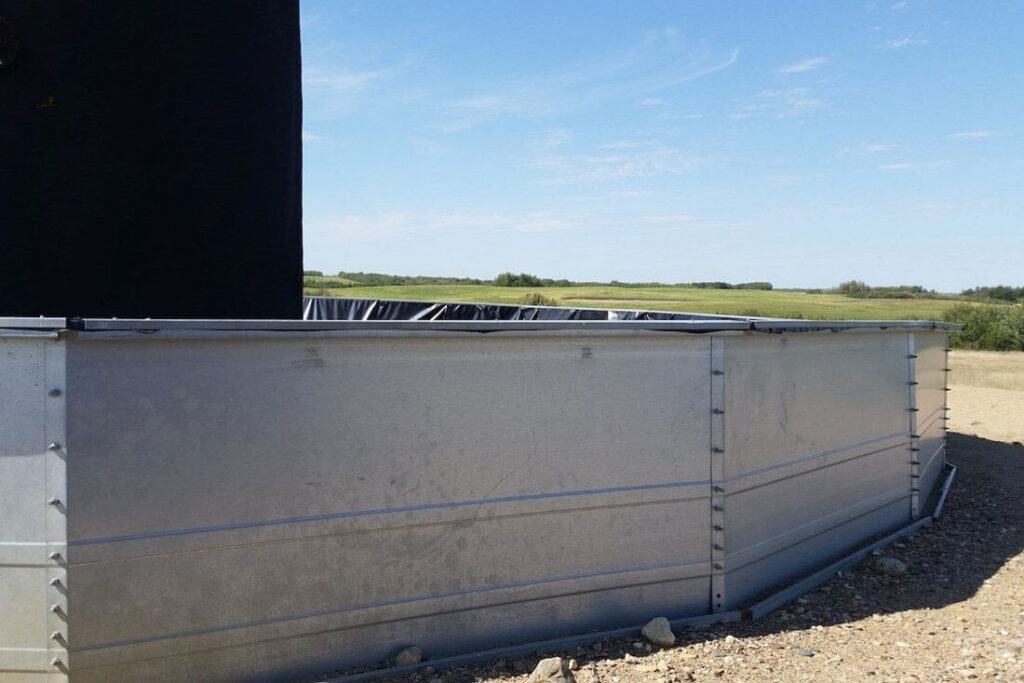
Benoit Rentals secondary containment systems are designed and built for strength, durability, and safety through assured compliance with oil industry environmental spill protection requirements.
They are fully modular, configurable and reusable. They use interlocking galvanized steel panels and a fast, easy-to-install, bolt-together design. The self-supporting, free-standing construction allows for a zero ground disturbance installation with minimal environmental disruption where site-appropriate.
We offer containment systems for all sizes and orientation of tanks for temporary well sites to large, permanent facility applications. Complete installation an maintenance services are offered as well.
Options and Add-Ons
- Black, 30mm enviro containment liner
- Geotextile matting
- Heavy-duty access stinger doors
- Barrier ladders
- Cross-over access stairs
- Pipe boots
- Tank rings
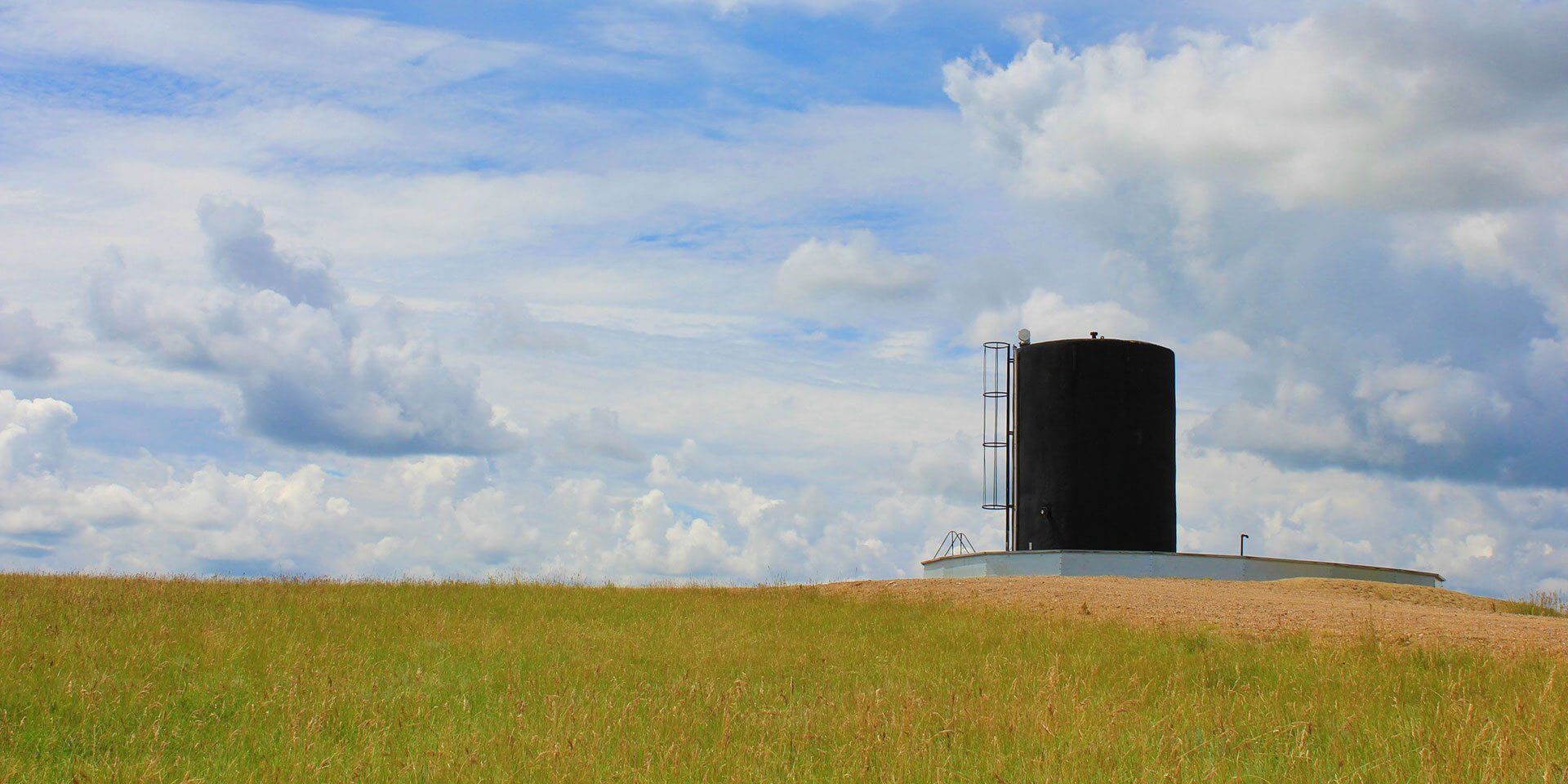
Proudly serving and renting equipment to the oil and gas industry in Alberta & Saskatchewan
We proudly service all of Alberta and Saskatchewan including Chauvin, Provost, Macklin, Wainwright, Hardisty, Camrose, Lloydminster, Vermillion, Bonnyville, Fort McMurray, Kindersley, Kerrobert, Edmonton, Calgary, Red Deer, Medicine Hat, Fort Saskatchewan, Nisku.
Feel free to stop in or contact us for further information regarding our equipment, and range of services in Alberta and Saskatchewan.
Alberta Oil and Gas
Rental Service Area
Saskatchewan Oil and Gas
Rental Service Area
Frequently Asked Questions
1. What are secondary containment systems and why are they important?
Secondary containment systems are protective structures designed to capture spills or leaks from primary storage equipment such as tanks. They are essential for preventing hazardous materials from entering soil and water, helping companies maintain environmental compliance and protect worksites from costly contamination.
2. How do secondary containment systems work on oilfield sites?
These systems provide a barrier surrounding storage vessels that contain liquids. If a primary tank leaks or overflows, the containment area holds the escaped liquid securely, preventing environmental damage and ensuring safe cleanup procedures in oilfield environments.
3. Are containment systems required by environmental regulations?
Yes. Regulations for oilfield operations and industrial sites often mandate secondary containment to prevent spills. These requirements help protect groundwater, reduce soil contamination, and ensure operators meet safety standards enforced by provincial and federal authorities.
4. What types of liquids can containment systems handle?
Containment systems can safely hold hydrocarbons, drilling fluids, chemicals, wastewater, and other potentially hazardous liquids. They are made of durable, chemical‑resistant materials that prevent seepage and maintain integrity under demanding field conditions.
5. What materials are secondary containment systems made from?
High‑strength containment systems are typically constructed from steel, polyethylene, or reinforced polymers designed to withstand environmental stress and chemical exposure. These materials provide a robust barrier against leaks and enhance on‑site safety.
6. Can containment systems be used with any tank size?
Yes. Secondary containment systems are scalable and can be configured to match various tank sizes and site requirements. Whether you use 100 BBL or larger tanks, the containment area can be sized to ensure adequate spill capture and compliance.
7. How are containment systems installed on a job site?
Containment systems are strategically positioned beneath and around tanks or equipment on stable ground. Professional installation ensures proper leveling, sealing, and alignment to fully contain potential spills while maintaining easy access for routine operations.
8. What are the benefits of renting containment systems from Benoit Rentals?
Renting containment systems eliminates large capital costs, simplifies maintenance, and provides flexibility for temporary or changing site needs. Benoit Rentals guarantees compliant, well‑maintained systems ready for immediate deployment.
9. How do containment systems support environmental protection efforts?
By capturing accidental spills before they spread, containment systems reduce soil contamination, protect water sources, and minimize ecological impact. They are a key safety measure that supports regulatory compliance and responsible resource management.
10. Can secondary containment systems be moved between job sites?
Yes. Many containment systems are designed for mobility and reconfiguration, allowing operators to reuse them across multiple projects. This portability improves operational flexibility and cost‑effectiveness for businesses with changing site needs.