
- Key Takeaways
- Oilfield Rig Mats Overview
- Primary Field Selection Factors
- Lifecycle Cost Dynamics
- Hybrid Layout Strategies
- Seasonal Access Demands
- Benoit Rentals Fleet Solutions
- Conclusion
- Frequently Asked Questions
- What are oilfield rig mats and why are they important?
- How do I choose the right rig mat for my oilfield site?
- What factors affect the lifecycle cost of rig mats?
- What is a hybrid rig mat layout and when is it useful?
- How do seasonal changes affect rig mat selection and performance?
- How can rig mats help meet environmental and access regulations?
- What types of rig mats are typically available in a rental fleet?
Key Takeaways
- Oilfield rigmats design and build stable, engineered platforms to preserve soft or sensitive ground, support the weight of heavy drilling equipment and provide safe access for vehicles and workers in harsh oil and gas environments. They create temporary roads, rig sites, crossings, crane pads, helipads and emergency response access.
- Wood and composite mats vary in structure, durability, and performance, so it is vital that mat design matches ground conditions, climate, and load requirements. They can enhance safety and minimize damage by verifying load ratings, surface traction attributes, and interlocking systems prior to picking a mat.
- Ground conditions, moisture, haul distances, project length, environmental regulations all impact the proper mat selection on any site. Project planners can use these as a checklist to compare options, then designate heavier or reinforced mats for unstable, saturated or high-impact zones.
- Lifecycle cost is about more than just what you pay to buy or rent something. It includes freight, repairs, decontamination, and disposal. Understanding total cost of ownership allows readers to determine when to invest in longer lasting composite mats, when wood mats will do, and how to control unanticipated costs.
- These hybrid layouts with composite mats in high-impact zones and wood mats in less demanding areas can help balance safety, performance, and budget. Seasonally adjusted layouts and ground condition monitoring enable operators to maintain access during freeze-thaw cycles, muskeg, and severe weather.
- Partnering with a seasoned rigmat supplier like Benoit Rentals means smarter choices about products, logistics and upkeep. Readers may apply these insights by working with specialists early in planning to design site-specific matting strategies that satisfy operational and environmental demands.
Oilfield rig mats are robust temporary platforms that distribute load and provide stable surface support for rigs, trucks, and other machinery on worksites. They help minimize soil damage, rutting, and keep sites safer in wet, soft, or uneven terrain. Constructed from wood, steel, or a combination of the two, they withstand heavy loads and rugged field abuse. Numerous crews rely on rig mats to comply with site regulations, defend the surrounding terrain, and preserve approaches beneath severe weather. Appropriate use of the right mat type helps reduce repair costs and mitigate delays caused by stuck equipment or poor ground. The following sections demystify main varieties, applications, and advice for selecting mats for oilfield work.
Oilfield Rigmats Overview

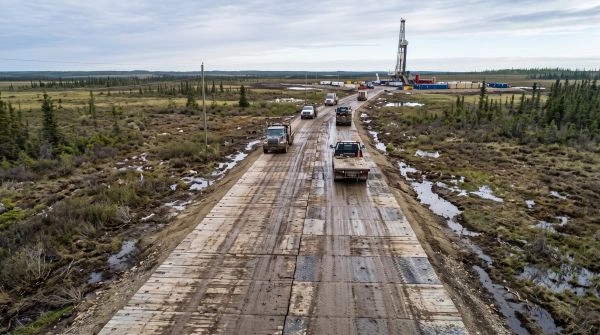
Oilfield rigmats are strategically engineered platforms that distribute heavy loads and establish solid working surfaces on soft ground. They sustain drilling rigs, trucks, cranes, and camp units while assisting in protecting soils, wetlands, and muskeg from deep ruts and contamination.
In oil and gas work, crews utilize wood and composite construction mats for temporary roads, lease access, and solid rig pads that can relocate from location to location as projects evolve. Common applications are drilling and well pads, pipeline crossings, crane lifts, helipads, and emergency response access in seasonal areas of freezing and thawing.
Benoit Rentals offers oilfield rigmats to help create stable working surfaces and improve access across challenging ground conditions.
Structural Engineering
Wood rig mats typically incorporate a steel frame with a wood deck. Most are comprised of three layers of lumber bolted together, with the top and bottom layers oriented perpendicular to the middle layer. A common layout is an 11 board count, 21 board count, and 11 board count: 11 boards (often 2 × 8 × 4.3 m) on the top and bottom, and 21 shorter boards (2 × 8 × 2.4 m) in the middle. This cross laminated pattern stiffens the mat and assists the mat in bridging soft spots, preventing bowing.
Composite rig mats depend on high-density polyethylene (HDPE) or other engineered plastics, occasionally with steel-reinforced cores. The plastic shell resists moisture, rot, and many chemicals, which can prolong service life in harsh environments. Most systems employ molded ribs and internal webs in place of timber beams to support bending loads.
Cross members, deck boards, and welds all combine to determine the mat’s load bearing capacity. On framed wood mats, welded steel stringers connect to lifting lugs and perimeter beams, while the bolted deck secures loads to the frame. On composite systems, molded cross ribs and bonded joints distribute the load across the entire panel. Interlocking edges and overlapping flanges connect panels into one stable platform, which is critical beneath cranes or tall point loads.
Common rig mats are approximately 12 inches (approximately 305 millimeters) thick, with plan sizes near 2.4 meters by 6.1 meters or larger. Load ratings reach 600 psi surface pressure or greater on products such as heavy “mega-deck” styles, suitable for concentrated drilling rig legs and other heavy equipment foundations. Many mats provide roughly a decade of service, and with proper maintenance and storage, can experience 15 to 20 years of field use.
Weight Distribution
The primary function of a rigmat is to distribute weight from a small contact patch into an expanded footprint so that the earth does not shear or rut. Under a truck tire or rig jack, the mat converts high point pressure into lower, more even contact with the ground. This aids in making access roads feasible through soft soils, muskeg or spring breakup.
Composite mats typically provide more uniform load distribution as the material is homogeneous throughout the entire panel. There are fewer weak points of knots, splits, or wet timber, which is significant for heavy rolling loads like tracked cranes.
Key orientation and overlap points include:
- Align mats so long direction follows main traffic path
- Stagger joints between rows so you don’t have one weak seam.
- Overlap at high‑load areas, such as under crane outriggers
- Avoid leaving unsupported “cantilevered” corners under wheels
- Tie rows together where turning or side‑loading is expected
Rig selection should correlate to anticipated loads, including static rig weights, truck traffic and any specialty equipment such as coiled tubing units or oversized cranes. Under-rated mats can pump mud through joints or crack, resulting in lost time, recovery work and increased site restoration costs.
Surface Traction
Surface traction provided by rigmats plays a role in vehicle control as well as worker safety. Most wood mats employ rough-sawn timber decking, cleats, or anti-slip strips to increase friction. Composite mats frequently mold in tread patterns that shed mud and provide additional traction beneath tires and boots in wet conditions.
Wood provides great traction when dry, but can become slick when wet with drilling mud, frozen rain or fine clay. Molded composite textures can shed water more effectively and maintain more consistent friction under rain or freeze-thaw, which is critical on slopes or around rig floor access.
Common traction features include:
- Aggressive molded tread blocks or chevron patterns
- Cross‑cut grooves in timber decks
- Grit or sand‑infused anti‑slip coatings on high‑traffic zones
- Raised nubs at pedestrian walkways
- Integrated ramps that reduce wheel spin at entry points
Good traction means fewer slips, trips, and falls and prevents trucks, loaders, and cranes from skidding when they brake or turn. This supports safer movement throughout the site and helps maintain access open as surface conditions change throughout the season.
Primary Field Selection Factors
Field rig mat selection boils down to how your ground behaves, what loads you intend to run, and how long your system has to remain in play without failure or unnecessary downtime.
Create a simple checklist before you order: terrain type and stability, moisture level, ground bearing capacity, equipment weight and traffic volume, project duration, climate, and any environmental or regulatory limits. Include site access challenges, such as narrow roads or steep inclines, because the appropriate mat system can increase access and reduce downtime by up to thirty percent due to quicker installation and more secure traffic.
No one mat type works for all sites. Wood, composite, and steel all have trade-offs on durability, load-bearing capacity, and reusability, so every location in Alberta or other basins requires its own mix. Of course, always adjust the manufacturer’s specifications to local standards and field conditions, particularly for Alberta’s freeze-thaw cycles and clay, muskeg, or shale-based soils.
1. Terrain Stability
For firm, well-drained pads or graded lease roads, wood mats can sometimes provide sufficient support for light trucks and mid-weight rigs, particularly when the subgrade is compacted gravel. On soft, peat or muskeg, bearing capacity plummets quickly and even basic timber can punch through. Crews typically advance to thicker timber mats or composites with engineered cores.
Composite mats hold their shape better on rutted, uneven, or saturated ground. They withstand warping and edge breakage over voids or sharp shale fragments, helping maintain a flat running surface for tracked dozers, coil units, and frac spreads.
In extreme cases, deep muskeg, thawing permafrost, steep side slopes or high-load rig substructures, heavier composite or large timber rig mats distribute wheel loads over a larger area and reduce ground pressure. Mats with steel frames or reinforced beams introduce stiffness such that the system acts as a continuous platform, not individual planks.
2. Moisture Exposure

Wood mats absorb water, expand, and then dry unevenly, which can reduce longevity and create tripping hazards or joint separation. In standing water or bad drainage, rot and mechanical injury accelerate.
Composite mats of HDPE or other plastics don’t soak up water and they resist brine, drilling fluids, and most field chemistries better. That makes them suitable for marshy or polluted sites where you require robust foundation support.
Where timber isn’t used, as in Alberta’s variable climate, treated lumber slows rot and helps the mat withstand repeated freeze-thaw cycles and spring breakup. Whether it is wood or composite, consistent inspection for broken fasteners, cracked panels and joint uplift assists in preventing both the mat and the subgrade from succumbing to traffic.
3. Haul Logistics
Wood mats are randomly heavier and bulkier, thus requiring more trailers and fuel to transport into remote locations, particularly when roads are weight restricted. Composite mats are lighter and frequently thinner, therefore they stack denser, ship more units per load and reduce shipping expenses.
Lower weight makes composite mats easier to manipulate with smaller cranes, loaders, or forklifts, which is helpful when access is tight or you want to keep support equipment to a minimum. Designing mat length and width around standard trailer sizes allows you to maximize each load and minimize hauling trips. Depending on mat weight and site conditions, skid steers for material handling may help crews position equipment and manage site preparation, provided the machine and attachments are suitable for the task.
Maintaining a live inventory of mats, including location, condition, and planned moves, helps facilitate more seamless mobilization and demobilization. That reduces downtime for rigs and crews waiting to get at.
4. Project Longevity
Wood rig mats can hold up great for short jobs or a couple redeployments. Constant lifting, dragging, and heavy tracked traffic take their toll. Composite mats, on the other hand, tend to last longer, resist surface wear, and exhibit lower replacement rates across projects.
High cycle action, heavy equipment such as drilling rigs or frac pumps, and harsh climates increase damage potential for all types of mats. When you design deep programs, incorporate repair, inspection, and anticipated replacement into your cost and schedule model, not just initial purchase or rental charge.
5. Environmental Compliance
Oil and gas work has to comply with regulations on ground protection, spill containment and habitat disturbance. Mats aid this by distributing loads, minimizing rutting and subsoil and topsoil mixing for easier reclaiming later.
On sensitive wetlands or soft soils, mats minimize ground disturbance and soil compaction while maintaining vehicles on a roadway. Composite mats provide additional benefits in chemical environments as they resist absorption, clean up quicker, and are easier to decontaminate than timber.
Reusability and modular layouts are important because a mat system that can be picked up, scrubbed and redeployed reduces waste and disposal requirements throughout the lifetime of a program. For Alberta oilfields, verify the mat system complies with provincial safety, environmental, and industry standards on load ratings, handling, and spill response compatibility.
Rigmat planning should also account for site-specific reclamation obligations, including Alberta’s goal of returning disturbed land to equivalent land capability under its oil and gas conservation and reclamation guidelines.h
Lifecycle Cost Dynamics
Lifecycle cost dynamics for rig mats track every euro spent from the day you bring mats in to the day you haul them off site. That’s not just the sticker price, but what you spend to move, repair, sanitize and recycle them, as well as any value you recoup when reselling.
- Purchase: Wood mats usually cost less per unit than composite mats, which draws attention on short jobs. Composite designs frequently provide two to five times the service life, so cost per use can plummet when you amortize it over multiple uses.
- Rental: Rental fees reflect this same trade-off. Wood rentals are usually less expensive per day but could require greater volume because of breakage. Composites rent higher per diem, but fewer replacements and less damage risk to underlying soil or roads can narrow the gap.
- Maintenance: Wood mats often need bolt tightening, board replacement, and more frequent culling due to rot or delamination, especially in wet or high‑traffic sites. Composite mats require inspections for cracked sections or failed connections, but they tend to better withstand heavy cycles, chemicals, and UV exposure. As a result, repair shops get them less often.
- Decontamination and disposal: At the end of life, wood mats with oil or drilling fluids may move into higher-cost waste streams, while clean units might be chipped or reused. Composite mats are frequently 100% recyclable or take-back, transferring some of the cost to the maker but occasionally with more freight to central locations.
Upfront material cost is only logical when considered alongside anticipated life, repair cycles, and maintenance responsibilities. Most operators discover that most money goes out in the operating phase, not when mats are purchased, so naive price-per-mat perspectives can obscure risk. Site soil type, climate, well program length, and mat lifting frequency all vary the lifecycle curve. Harsh freeze-thaw cycles, salt exposure, or frequent crane travel could tip the scales toward a more robust composite configuration. Brief, dry pad constructions could easily gravitate toward wood with an obvious disposal strategy. Historical well data, straightforward failure tracking, and even rudimentary modeling assist teams in catching trends, reducing waste, and incorporating lifecycle thinking into annual budgets.
Freight Freightage
Freight tends to be one of the biggest cost drivers for rig mats as each move in or out involves numerous tonnes being transported via trucks, rail, or barge over long distances. Heavier wood mats — particularly thick hardwood designs — limit the number of pieces you can legally load per vehicle, so you may require multiple trips to a remote pad 800 kilometres from your storage yard. Lighter composite mats of the same footprint can almost double the mat count per truck, which in turn decreases fuel burn, tolls, and driver hours. This weight gap also links to carbon footprint: fewer trips and lighter loads can cut emissions and sometimes support corporate reporting on climate metrics. To keep freight lean, field teams frequently consolidate mats by uniform size, stack them flat to prevent shifting, and utilize loading plans that maximize trailer length and height without violating axle weight limits. A hodgepodge fleet of sizes without a plan can leave you paying for empty deck space. Freight planning is most effective beginning with the drill or completion schedule, not the week before spud, as lead time allows you to compare truck versus rail, backhaul options, and shared loads with neighboring projects. All of these can eliminate rush rates, idle crews on-site, and unplanned storage or laydown costs.
Repair Frequency
Wood rig mats become worn as split timbers, broken end boards, exposed steel inserts and early rot on wet or marsh sites that necessitate more frequent patching or even full removal after they cease spreading loads effectively. Composite mats typically take the brunt of heavy axle loads, drill fluids and UV exposure with less evident failure. They are subject to localized cracking, connector damage or seam issues if dropped or dragged by chains. In reality, most operators encounter fewer repair events over the life of composite units, so workshops and welding yards spend more time on a smaller set of issue pieces rather than non-stop wood triage. Easy inspection protocols—fast checks during rig walks or subsequent to heavy rain—prevent damage from developing into stuck trucks, ground rutting or accidents. Maintaining a simple repair type, location, mat type repair log crafts a data path that later informs decisions on what designs, thicknesses or handling practices really hold up on certain soil and climate profiles.
Decontamination Needs
Because rig mats frequently lie beneath live drilling, workover, or production equipment, they absorb oil, brine, drilling mud, and even NORMs from cuttings. Cleaning them well is good environmental stewardship as well as the law, particularly on wetlands, farmland, or adjacent to protected water. Composite mats with non‑porous skins and good chemical resistance generally rinse down more quickly with high‑pressure water or approved detergents and don’t tend to trap fluids inside the core. Wood mats act very differently. Fibers absorb hydrocarbons and salts, which can transform a straightforward surface wash into a more involved decontamination process or even require disposal as hazardous waste if heavily stained. For vulnerable basins, numerous crews dictate explicit decontamination measures within the project schedule, outlining wash rack locations, run‑off capture, testing strategies, and which mat varieties may return to pristine sites. These protocols not only facilitate cleaner yards and reduce cross‑contamination between fields but provide finance and HSE teams with tighter control over decontamination cost and risk where oil, fuel, or other liquids could escape during cleaning or handling, suitable secondary containment systems can help capture spills and support site-specific environmental controls.
Hybrid Layout Strategies
Hybrid layout strategies for oilfield rig mats combine mat types and patterns in a single plan to achieve more efficient use of space and smoother site flow. This concept is typical in industries with complex workflows, like manufacturing, logistics, or healthcare, and it translates nicely on multi-stage drilling or completion pads.
One is to mix and match wood and composite mats in hybrid designs so price, functionality and eco demands remain in check. Composite mats typically have a longer lifespan, withstand repeated loading, and resist water and chemicals. They’re typically more expensive. Wood mats were cheaper initially and easier to find in many areas, but they deteriorate more quickly and can be more difficult to clean if spills occur. A hybrid layout can position more expensive composites only where they provide an obvious advantage and utilize wood mats where stresses and hazards remain reduced. This hybrid can reduce overall mat expense while still achieving safety and ground protection objectives, similar to a plant that mixes process-oriented and product-oriented layouts to fit flow and cost.
A typical configuration is to locate the composite mats in high-impact areas and wood mats in less hard regions. High-impact zones include crane pads, rig substructures, key pipe racks, and road or trench crossings where heavy trucks brake, turn, or queue. In these locations, hybrid mats assist in maintaining grade, minimizing ruts, and facilitating multiple passes. Wood mats tend to hold up pretty well around camps, light-vehicle parking, or low-traffic walkways. This type of targeted application is similar to hybrid layouts in warehouses that cluster fast-moving products close to docks and slower inventory further away to optimize throughput and lower expenses.
The design of the matting system counts. Overlapping flanges between mats minimize trip edges, distribute wheel loads and control water flow. Secure connections like integrated locking pins or side clamps keep mats from drifting under tracked machinery. Modular blocks, such as 10 m by 10 m crane pads constructed from standard panels, simplify scaling up and down and fitting the site’s space requirements. Because hybrid layouts can be trickier to design than simple grids, they are best supported with clear maps, load plans and a rudimentary analysis of how trucks, people and tools move through the site.
Teasing out synergy between projects and maintaining flexibility in how mats are set and moved keeps the layout useful as the project shifts. Early drilling frequently requires additional heavy-duty coverage in the vicinity of the rig, while later stages might pivot to prioritize production lines or workover access. An adaptive hybrid layout can shift composite mats from a completed well pad to a new crane location and backfill the vacated area with wood mats for less demanding activities. Such staged transformation facilitates increased productivity and enables crews to respond to weather, ground strength, or market-driven schedule changes without complete redesign. Periodic inspections of wheel paths, soft spots, and downtime reports inform these adjustments and help sustain improvements in both safety and cost.
Seasonal Access Demands
Seasonal access requirements govern how rig mats are designed and deployed throughout much of Canada, such as Alberta, and in other areas of soft soils, muskeg or heavy freeze-thaw cycling. In oil and gas, forestry, and renewable energy work, the mats can quickly become the only way to keep access roads and pads usable while still complying with safety and environmental regulations such as 29 CFR 1926.1402, which requires firm, drained, and graded ground beneath equipment. With the change of seasons, crews commonly switch mat style, thickness and placement and even run double mat systems over saturated subgrade to disperse loads from rigs, cranes and heavy duty trucks. On these time-sensitive wells and line projects, teams need matting systems that can go in and come out quick, so they can keep pace with weather windows, emergency work, and short-term drilling or construction seasons. Before mobilizing equipment, project teams should review applicable Alberta land reclamation and remediation guidelines to understand the guidance relevant to site restoration and environmental management.
Spring Breakup
Spring breakup with melting snow, rising water tables and deep thaw quickly make access roads and lease pads soft and waterlogged. Heavy loads can sink, shear the surface and slash deep ruts that bog down work and necessitate expensive repairs to both the construction site and adjacent wetlands.
A lot of operators migrate to composite or heavy-duty timber mats with maximum bearing capacity during this time. Some operators even add mat thickness or volume to accommodate heavier rigs and cranes. On very wet subgrade, a double mat is typical to distribute pressure and keep equipment above the mud line.
Crews tighten how they hook up the mats. They could expand overlap between panels and utilize secure pin or bolted connections, so when the subgrade settles unevenly, the surface behaves as a single solid base rather than individual floating segments.
Forward planning counts here. Access Demands Project teams that model probable thaw depths, haul in sufficient mat inventory and establish well defined reclamation plans typically maintain access open while reducing ground disturbance, sedimentation and cleanup expenses post season.
Winter Muskeg
Winter muskeg sometimes appears hard frozen. In reality, it acts like a thin crust over soft, organic soils, particularly when under tracked or wheeled loads. Snow cover conceals voids, frozen ruts and ice lenses, so it is more difficult to estimate bearing capacity visually. Sudden warm spells can soften the surface within a few hours.
Most of them depend on composite mats with embedded anti-slip texture and strong resistance to cracking in sub-zero conditions. Timber and CLT mats remain in use but require special care to prevent frozen moisture damage around bolt pockets and lifting points and potentially higher safety factors when cranes or large rigs are involved.
Winter work presents new challenges as ground and mat conditions transform with snow packs, ice accretion, and traffic polished surfaces. This requires regular inspections for ice, surface abrasion, and mechanical harm, in addition to de-icing or snow clearance on high-traffic paths and work pads.
Safe winter access is about more than just trucks. Secure, flat platforms reduce the risk of slips, trips, and vehicle skids. They assist crews in fulfilling not only their own safety goals but those of industry standards that anticipate ground to hold loads even amidst extreme weather oscillations.
Benoit Rentals Fleet Solutions
Benoit Rentals offers an extensive rig mat fleet designed for oilfield work and other demanding jobs. We keep the emphasis on solid footing, secure load support and easy logistics for operators who require dependable ground cover, not more hassle.
Our fleet encompasses wood, composite, and hybrid rig mats in standard field sizes including 8′ x 20′ and 8′ x 40′. Wood mats provide dense weight support at a lower cost and perform well on frozen or hard-packed earth. Composite mats are lighter, simple to clean and resist rot, which assists in long projects or wet soil. Hybrid alternatives combine wood cores with composite or steel sections to withstand greater forces, daily crane journeys, or tracked models that pivot on the spot. All mats are Canadian made and 100% recyclable, which assists firms that must demonstrate transparent progress toward reduced site impact and enhanced material repurposing. That same fleet supports oil and gas, large construction, industrial plants and linear infrastructure, so one provider can cover road building, plant turnarounds and drilling pads with the same system.
Selection assistance is a huge component. Benoit Rentals collaborates with field crews to align mat type and layout to soil conditions, axle loads, crane charts and local regulations. If you have a pad on soft muskeg, it would lean on thicker or hybrid mats around the crane with normal wood mats on the access road. For sites with strict environmental regulations, composite mats reduce ground impact and speed up restoration, aiding permits and final reclamation reports. Having worked through Alberta’s spring thaw, deep winter and sudden weather shifts, they know when to flag a switch from lighter layouts to denser patterns or double-stacked sections to prevent heavy trucks from sinking.
With daily, weekly, and monthly rental terms, a short well service job, a six-week plant shutdown, and a year-long tie-in each only pay for the time they need. Delivery runs direct to the worksite from multiple Alberta locations – Centre St, New Sarepta, Main St, Chauvin, and other depots – which reduces wait times and simplifies mobilization. Crews can perform complete installation, moves, on-site audits, and pull-out and maintain capacity for quick reaction when a site requires urgent access after downpours or a road collapse on a live job.
Planning Alberta oilfield work? Get in touch with Benoit Rentals to configure a specialized mat package that suits your ground, your load, and your budget while ensuring compliance and site protection.
Conclusion
Oilfield rig mats are at the heart of safe, stable work in rough terrain and inclement weather. The selection of mat type, design plan, and rental mix defines more than access. It molds crew safety, lease stewardship, and overall field expense over time. A clever combination of wood, steel, and composite mats can reduce downtime, keep rigs rolling, and endure freeze-thaw cycles or spongy earth.
Field requirements change from season to season. A flexible rental scheme with the right mat stock on site brings real value. For your next pad, road or winter push, work with a reliable mat rental crew, step through your ground and load requirements, and schedule a configuration that matches the way your field actually operates.
Frequently Asked Questions
What are oilfield rig mats and why are they important?
Oilfield rig mats, known as heavy-duty ground protection platforms, distribute load, minimize rutting and help to keep rigs, trucks and workers secure on soft or sensitive ground. This reduces stuck equipment, site damage and expensive downtime while enhancing safety and regulatory compliance.
How do I choose the right rig mat for my oilfield site?
Concentrate on soil conditions, load weight, traffic volume and project length. Take into account climate, environmental regulations and access roads. A specialist can fit rig mat size, material and connection type to your field conditions to minimize risk and total project cost.
What factors affect the lifecycle cost of rig mats?
The main factors are quality of material, how often they’re used, the site conditions, and how they’re handled. Right installation, cleaning, and storage can prolong mat life. Opting for rugged mats that fit your application typically reduces overall cost per use despite a higher initial price.
What is a hybrid rig mat layout and when is it useful?
A hybrid layout mixes mat types or thicknesses throughout the same site. Heavier mats are placed under rigs and heavy traffic areas. Lighter mats cover access roads. It’s a smart compromise that balances strength and cost without over-engineering parts of the structure that don’t see much stress.
How do seasonal changes affect rig mat selection and performance?
Rain, snow and thaw cycles make the ground weak and heighten the risk of ruts. Wet or freeze-thaw seasons can require sites to have thicker mats, closer layouts and more regular inspections. Seasonal access planning minimizes stuck equipment, repair costs and schedule delays.
How can rig mats help meet environmental and access regulations?
With the help of rig mats, reduce soil disturbance, rutting, and contamination spread. They safeguard wetlands, farmland, and sensitive habitats. It supports permit conditions. With the right mat system, it is easier to maintain environmental compliance and record conscientious site access.
What types of rig mats are typically available in a rental fleet?
Most fleets provide timber, composite, and steel-reinforced mats in various sizes and capacities. These can include crane mats, access mats, and specialty bridge or crossing solutions. A flexible fleet enables you to customize coverage for rigs, staging areas, and access roads.