
- Key Takeaways
- What Are Frac Water Tanks?
- How Frac Water Tanks Work
- Optimizing Site Layout
- Navigating Alberta’s Challenges
- Beyond Simple Storage
- Choose Your Rental Partner
- Conclusion
- Frequently Asked Questions
Key Takeaways
- Frac water tanks provide temporary, high-volume storage for water, process fluids, and chemicals, facilitating hydraulic fracturing, drilling, and environmental cleanup. Select from flexible, steel, and portable buffer tanks to fit site requirements and fluid types.
- Heavy duty structural designs enhance safety and uptime with closed top, open top weir, double wall, and round vessel options. Look for thick steel walls, reinforced manways, watertight construction, and freeze protection with heating coils and insulation.
- Material integrity protects fluids and machinery via carbon steel or galvanized constructions, chemical-resistant linings, and top-shelf fittings. Check industry standards and use stainless or polypropylene valves to minimize leaks.
- Efficient workflows rely on delivery, placement, filling, and transfer using pumps, manifolds, and SCADA monitoring. Trace levels, flow, and pressure to avoid overfilling, maximize efficiency, and maintain safe operations.
- Advanced site layouts consolidate tanks by function, minimize footprints with high-capacity or modular tanks, and keep access open for safety. Use manifold systems, asset labeling, and regular inspection for reduced downtime and cross-contamination.
- Choose rental partners with dependable equipment, robust logistics, and compliance assistance. Seek out turnkey services, scalable inventory, backup units, and documented maintenance that will keep your projects on schedule and in compliance.
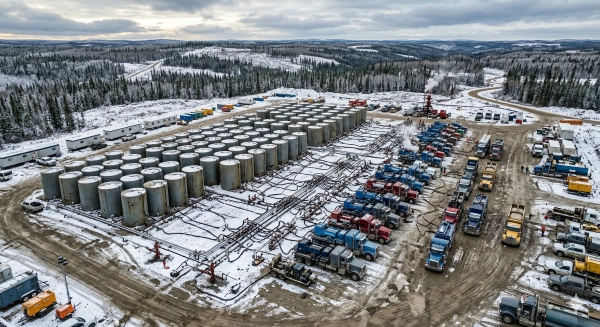
Frac water tanks are huge, sealed steel containers that store and stage water at fracking sites. Constructed in modular sizes, they store approximately 1,900 to 2,400 cubic meters per unit and connect in series to accommodate large daily flow. Designs differ by site requirements, including double-wall, vapor control, and brine or recycled water corrosion-resistant linings. Setup often encompasses manifolded lines, flow meters, and secondary containment to reduce spill risk and accelerate transfers. Most fleets now accommodate blended sources, such as produced water, to reduce fresh water consumption. To contextualize costs and planning, the following sections address capacity calculations, rental versus purchase, siting guidelines, and regular inspections that keep tanks safe, compliant, and prepared throughout each frac phase.
What Are Frac Water Tanks?
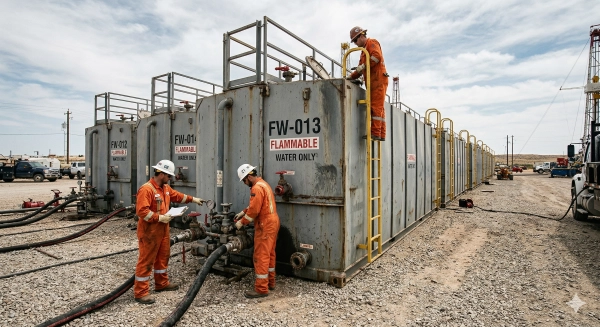
Frac tanks are high-capacity, mobile storage solutions designed to handle water, process fluids, and chemicals in oil and gas operations. Known as Baker tanks, they are rugged rectangular or round containers that store thousands of liters of fluid or solid matter on a short or medium-term basis. They provide storage for freshwater, produced water, wastewater, proppant slurries, and additives required for hydraulic fracturing and drilling and enable safe handling of both hazardous and non-hazardous liquids. We offer flexible frac tanks, steel tanks, portable buffer tanks, and mix tanks to meet site restrictions and flow requirements throughout oil and gas, construction, environmental remediation, municipal, and agriculture projects.
Core Purpose
Frac tanks offer temporary liquid storage that keeps field work flowing and assists teams with water management across isolated sites or congested hubs. Users stage freshwater for pumping, hold produced water for reuse and segregate wastewater prior to haul-off or treatment.
They store process fluids, proppant slurries, and chemical mixes for frac jobs. This decreases wait times at the blender and minimizes stress on sensitive local water supplies.
Operators utilize them for storm water capture, emergency containment during spills and short-term storage of contaminated water on remediation jobs at landfills, brownfields and industrial yards. Tanks can serve as a buffer that smooths out pump surges, delivering a consistent stream to high-demand activities such as coil tubing, cementing or even dust control across an expansive worksite.
Structural Design
Standard configurations consist of vapor control closed-top tanks, solids settlement and phase separation open-top weir tanks, double-wall secondary containment units, and round vessels for space-limited or transport-restricted sites.
Common features include thick steel walls, reinforced manways, non-slip platforms and ladders, internal baffles, and fully welded watertight seams to minimize leaks and cross-contamination.
- Approx. 8,400 gallons (approximately 31,800 liters): small pads, pilot tests, sampling.
- 10,000 to 15,000 gallons (approximately 37,900 to 56,800 liters): mid-size jobs, remediation pits, storm events.
- 17,000 to 21,000 gallons (approximately 64,400 to 79,500 liters): large fracs, municipal bypass, farm runoff. Each tank can hold up to 21,000 gallons and can be relocated when empty by tractor or truck.
Our cold-weather toting add-ons, including heating coils, insulation, and custom-fit blankets, keep fluids within spec and freeze damage at bay.
Material Integrity
For tanks, most use carbon or corrugated galvanized steel for strength, with urethane parts where chemical resistance is critical. Interior coatings or bare steel liners are selected per fluid type to reduce corrosion and leaching. Top-of-the-line fittings, including stainless steel ball valves, cam-locks, and banjo polypropylene connections, help prevent leaks and quicken set-up. Units adhere to industry standards and common building codes for safety, long-term durability, and easy access to stored media. Frac tanks, such as open top, weir, mix, and closed-top types, store large volumes of industrial liquids and proppants for time sensitive, large scale needs.
How Frac Water Tanks Work
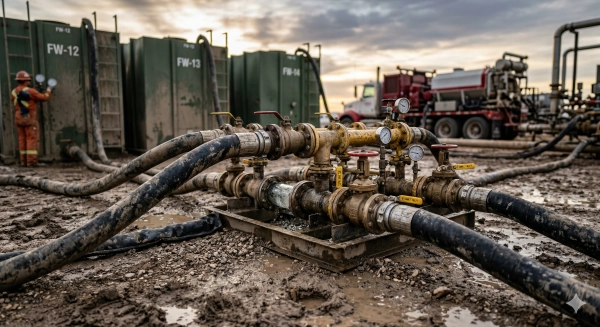
Frac tanks are massive, transportable steel containers for short-term bulk liquid storage, commonly 26–79 m³ (7,000–21,000+ gal). They come in various designs including open-top with weir walls, closed-top, single- and double-wall, and mini frac tanks. Made with 6.35 mm (quarter-inch) steel and chemical-resistant linings, they accommodate fluids up to 1.7–2.0 specific gravity. Multiple ports—4″ butterfly drain, 3″ fill, etc.—support rapid fill and discharge. Common uses include frac water, brine, treated water, fuels, acids, fertilizers, and toxic chemicals, along with on-site blending. The workflow includes delivery, setup, filling, storage, transfer, and removal, all coordinated with pumps, hoses, manifolds, and SCADA or pressure sensors for control.
1. Delivery and Placement
Arrange transportation via tractor-trailers, roll-off trucks, or cranes for tight or remote locations. Verify route limits, ground bearing pressure, and turn radius at access points.
Choose a compacted, level pad with drainage and geotextile if the soil is weak. Keep clear swing paths for trucks and rig-ups to reduce downtime.
Position tanks in close proximity to the water sources, pump skids or manifolds to reduce hose length. Provide safe walkways and emergency escape. Map power, lighting, and spill kits.
Make up a basic site layout sheet with tank ID, capacity, fluid type, connection sizes, manifold link, and access route. Update it as tanks shift.
2. Filling and Sourcing
Employ authorized fresh water, permit-holding river withdrawals, or municipal supplies. Validate intake screens and flow limits to protect aquatic life. For chemicals, ensure compatibility with linings.
Fill via top lines, cam-lock hoses and 3-inch ports with diesel or electric pumps. Vacuum trucks accelerate front end mobilization.
Monitor fill rate through level alarms, submersible pressure sensors, or SCADA. Include high-level cutouts to prevent overfill and berm breaches.
Log source, volume in cubic meters, and quality data such as turbidity, total dissolved solids, and pH. Save receipts for regulatory and ESG reporting.
3. On-Site Storage
Maintain setpoints that keep pace with pumping demand and buffer peak draws. Look out for leaks at manways, vents and flange joints.
Inspect interiors, coatings, vents and ladder cages on a set schedule. Skim oil sheen and purge sediment if samples indicate accumulation.
Employ double-wall or secondary containment for hazardous fluids. Consider these tanks as bailers for spills.
Group by function: mix tanks for chemical dosing, buffer tanks for surge control, sanitary tanks for wastewater. Clear labels reduce the cross-contamination threat.
4. Water Transfer
Link tanks to pumps, manifolds or pipelines for consistent flow to blenders or dust control locations. Stage hose bridges to maintain open roads.
Use quality hoses, ball or butterfly valves, and quick-connects to limit leaks and speed swaps.
Quantify transfer volumes and flow rates for optimization and gallonage savings. Calibrate meters.
Install pressure relief vents, check valves, and emergency E-stops. Lockout and tag out prior to hose breakage.
5. Emptying and Removal
Drain via pumps or gravity for maximum drainage through 4-inch valves and low-point sumps. Heel removal minimizes waste.
Clean tanks of sludge or residues. Make sure it is gas-free before entering.
Dispose of wastewater and solids under permits while segregating hazardous streams. Maintain manifests.
Pull to schedule so that it does not become a congestion and to keep the next phase on schedule.
Optimizing Site Layout
Smart frac tank design increases throughput, reduces travel time, and minimizes risk. Design with dirt information, area restrictions, weather, and traffic demands in mind.
- Tank placements minimize hose runs to cut head loss and keep pumps close. Maintain a small footprint while having service lanes. Berms and liners create a quality system that can reduce contamination risk by 80%.
- Group by function to prevent mix-ups: clean water, process fluids, and waste streams in separate clusters with dedicated manifolds and clear drain paths. Open-top tanks with weir walls assist in staging water with sediment or sludge before treatment or reuse.
- Map access for trucks, loaders, pumps, and people. Maximize your site layout with one way loops, 4 to 6 meter lanes, and marked muster zones. Layflat hoses accelerate set-up and tear-down and enable agile layout adjustments.
- Select tank styles for ground and area. Vertical tanks save space on solid, sloped dirt. On soft or variable soils, spread loads with pads and avoid tall stacks. High-volume frac tanks maintain a temporary water supply so crews stay compliant with environmental and safety regulations.
- Survey soil and load limits; grade and compact pads.
- Cluster by fluid type; color-code lines.
- Define primary/secondary access routes.
- Right-size tanks to demand peaks.
- Use layflat hoses and quick-couplers.
- Install berms/liners.
- Add power, lighting, and weather shields.
- Standardize signage.
- Set inspection paths.
- Review KPIs; tech upgrades can lift productivity by 35%.
Manifold Systems
Manifold systems connect several frac tanks into a single header for feed and return. It centralizes distribution, stabilizes flow and supports transfer, filtration and blending without continuous truck moves.
With automated valves, pressure control and SCADA monitoring, they can balance levels, detect leaks and redirect flows by zone. Engineering design headers for mixed tank sizes, flow rates and fluid chemistries with isolation valves and pressure relief. Examine gaskets, gauges, quick-connects and supports. Record torque inspections and leak detection tests.
Footprint Reduction
Implement large tanks initially, then use vertical stacking in areas with stable and graded soil. Modular or custom sizes occupy tight or unusual spaces.
Consolidate like-for-like fluids to reduce overall tank count. Get rid of small and inefficient containers and replace them with top frac tanks that yield more capacity per square meter.
Safety Access
Maintain access lines around tanks for crews, trucks, and emergency equipment. Eliminate blind corners and dead ends.
Place secure decks, stairs, and grab rails at manways and installations. There should be labels on tanks, valves, and outlets showing fluid, flow direction, and hazards. Conduct periodic acid, chemical, and pressure safety drills.
Navigating Alberta’s Challenges
Frac water tanks in Alberta have to endure long hauls, rough access and lightning-speed shifts in demand while complying with rigorous regulations. Drought pressure, higher water use in fracking and winter extremes push the limits on design, setup and care.
Logistical Hurdles
We have remote pads, soft ground and weight limits on rural roads that slow mobilization out. Alberta has seasonal bans on heavy loads and bridge ratings that restrict axle weights, so big steel tanks and manifolds frequently require split shipments. Distances are serious; cross-province moves can reach 500 to 900 kilometers, and there are very limited places to refuel or service. When roads drift or thaw, site access constricts and crane pads subside.
Schedule flights with route recon, diversion spurs and time buffers for WX holds. Stock a rolling inventory at provincial depots such as Grande Prairie or Medicine Hat to reduce lead time. Get permits, pilot cars and after-hours yard access in place before that first truck rolls.
Employ portable steel frac tanks with fork pockets, short wheelbase trailers and flexible pillow tanks for tight leases. These set up quickly, require less soil preparation and accommodate staggered manifolds. With Alberta the way it is, keep a full rental suite onsite—hoses, manifolds, strainers, heat trace, gensets, meter skids, spill kits and spare gaskets—so crews can repair without waiting on a resupply.
Winter Operations
Freeze control keeps work on track even when temperatures dip far below 0°C. Stuff tanks with closed-loop heating coils, rigid insulation, and custom blankets around valves and sight glasses.
Monitor water temperature and viscosity at inlet and outlet. Add recirculation loops to prevent dead legs from freezing and log sensor data to spot slush before screens clog. Utilize steel tanks with welded reinforced seams, watertight manways and wind-rated vents. Snow load and driven ice can put stress on lids and flanges.
Hard short inspection cycles include blankets, hoses, and heat trace daily. Coils, burners, and glycol mix are inspected weekly. Record all repairs to comply with cold-weather safety plans.
Environmental Stewardship
Double-wall tanks, lined berms and drip trays mitigate soil and groundwater risk. Alberta’s drought is harsh, with Oldman Reservoir only near 30% of capacity, normally 61 to 80%, and a low snow winter. Pair that with rising demand: industry used about 260 billion liters in 2022, mostly in oilsands, while irrigation used 1.6 trillion liters. Nonsaline water use per frac increased about 195% since 2013, and as much as 70% can remain downhole. Ranchers near Rimbey speak out, highlighting local effects.
Cut draws by recycling and treating flowback and produced water for reuse where chemistry permits. Trace additives, toxic waste, and disposal as per existing regulations, and screen subcontracted haulers. Work with waste companies for sampling, manifests, and certified disposal routes. The province examines ways to force payment of long-overdue municipal taxes and anticipates increased attention on water sourcing, trucking wear and tear on roads, and community impact.
Beyond Simple Storage
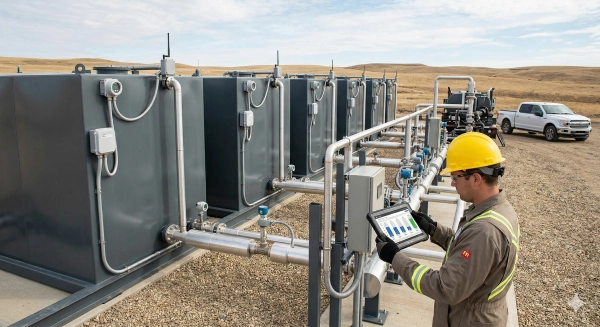
Frac water tanks are now process hubs, not just storage. They connect with pumps, filters, heaters, and dosing equipment to transport, purify, and prepare liquids on rapid schedules. Sizes range approximately 26,750 to 79,500 liters (7,070 to 21,000 gallons), with open-top, closed-top, and mix tanks designed for various activities such as settling, blending, or vapor management. Their portability means teams can be deployed across oil and gas, construction, municipal works, agricultural, and environmental cleanup sites without extended setup. Cold climates require heat tracing, insulated lines, and agitation to prevent ice and work stoppage.
Smart Monitoring
SCADA platforms interconnect tanks, pumps, and valves into a single perspective. Include submersible pressure sensors for level and flow, along with remote cameras for quick visual inspections across large pads or spread-out jobs.
Set high or low alarms with SMS or email notification. Combine with leak detection on berms and hose runs to catch little issues before they spill or stop work.
Utilize onboard data logging for level trends, turbidity, and pump runtimes. Export reports for regulators and clients to verify volumes processed and issues addressed.
Monitor temperature, pressure and critical chemical levels in real time. Warming your fluids goes way beyond simple storage. It keeps your viscosity in check during the cold months, maintains blend ratios in mix tanks, and keeps liners and gaskets safe from out-of-range chemistries.
Water Recycling
Closed-loop systems reduce fresh water intake and discharge volumes. Tanks stage fluids between treatment steps so flows remain steady even when field rates fluctuate.
Screen sand, fines and free oil initially with shakers, hydrocyclones and coalescers connected to tanks. Settling in open-top units takes out heavy solids. Bag or cartridge filters complete the task prior to reuse or compliant discharge.
Beyond basic storage, employ mix and buffer tanks to mix recycled and fresh water. Dosing pumps inject biocides or scale inhibitors on the fly to meet specifications.
Reduced water haul-in and disposal trips conserve fuel and costs, and they reduce site footprint and impact.
Modular Designs
Modular setups scale from one tank to a full farm with fast manifold swaps and standardized couplings. Portable steel tanks, bladder units, and customized sizes enable crews to conquer tight pads, soft soils, or rapid dewatering schedules in hours, not days.
Capacity grows or shrinks by phase: drilling, completions, cleanup, or shutdown. Across multi-site fleets, tanks follow jobs as they move, and environmental remediation enjoys staged liquid and solid storage that accelerates sorting and hauling.
Choose Your Rental Partner
Renting frac water tanks from the right partner establishes the tone for safety, uptime, and total cost. Seek wide inventory, turnkey field support, and contract terms that bend with real project fluctuations across oil, gas, and heavy civil locations.
Equipment Reliability
Insist on a fleet that’s clean, inspected, and fit for purpose. Tanks should come leak-free, gas-tested if applicable, and prepared with fittings to suit your manifolds. Maintenance and upkeep aren’t nice to have; they prevent breakdowns and spills, and they keep storage stable through heat, cold, and extended holds.
A strong provider offers a full spread: double-walled tanks for secondary containment, skidded tanks for fast moves, vapour-tight tanks for volatile fluids, and options for 50 to 80 cubic meter units and larger farms. Demand backup units staged within hours, not days, and verify quick-swap with pre-rigged lines.
| Inspection item | What to verify | Frequency |
|---|---|---|
| Shell integrity | No pitting, dents near seams, weld soundness | Before each dispatch |
| Linings/coatings | No blisters, peeling, chemical attack | Quarterly or per fluid change |
| Valves/gaskets | Seats seal, no weep under pressure | Before/after each job |
| Vents/vapour control | Operable, set points documented | Before deployment |
| Fittings/flanges | Correct rating, caps/blank-offs present | At loadout |
| Skids/ladders/rails | Safe access, anti-slip, secure mounts | Before dispatch |
| Cleaning records | Last service date, method, waste manifest | At handover |
| Pressure test | Hold test results within spec | Pre-rental |
Logistical Support
Expect end-to-end service: delivery, setup, tie-ins, and removal, even in remote sites. Local yards do help a lot; they cut haul times and disruption. Your partner should design site layout, spacing, and secondary containment. Then integrate tanks with pumps, filters, heat tracing, and pipelines.
You desire 24/7 assistance and emergency reaction. ONE CALL SHOULD TRIGGER TROUBLESHOOTING, SPARE PARTS AND SWAP UNITS. Above all, ensure they are capable of supporting multi-pad projects, with dispatch-ready trucks and operators with decades of field time. Rental moves huge capital costs—shipping, warehousing, insurance and maintenance—off your balance sheet and into a simple fee.
Regulatory Compliance
Confirm tanks adhere to safety and environmental regulations at the municipal, provincial, and national levels, such as Alberta’s oilfield standards where applicable. Need spec sheets, material certificates, pressure tests, and maintenance logs for audits. Request safe handling, storage, and disposal procedures of hazardous fluids, including SOPs and waste manifests. Make sure they train your crew on updates to regulations and best practices and provide custom terms, including flexible rental periods, to suit your program.
Conclusion
Frac water tanks go to work on site. They serve to store, transport, and treat massive volumes, with less waste and less wait. A well-thought-out layout reduces hose runs, truck time, and spill risk. Smart flow paths hold pumps rock-steady. Simple steps add up: a clean laydown, marked routes, and clear handoffs.
Alberta delivers cold, wind, and rough ground. Heat traced tanks, with tough seals and sturdy valves, stand up. Inline meters and sample ports provide quick examinations. Attach mix rings, sand traps, or weir plates for enhanced quality.
Choose a rental partner with quick swaps, 24/7 field crews and actual inventory! Request site maps, test logs, and service SLAs. Finished scheming the yard! Just post your layout and flow rates to get a tight, safe setup.
Frequently Asked Questions
What are frac water tanks?
Frac water tanks are massive, portable steel tanks used to store water for fracking. They contain fresh, brine, or produced water. With a modular design, they support rapid mobilization, secure containment, and highly efficient site operations.
How do frac water tanks work on site?
Tanks are delivered and positioned by trucks. Manifolds and hoses link them together for quick fill, transfer, and recovery. Pumps deliver water to and take water from the frac spread. Valves and gauges manage flow and monitor volumes for accurate operations.
What capacities do frac water tanks offer?
The majority of single tanks contain 60 to 80 m3. Operators routinely manifold multiple tanks for thousands of cubic meters. Inquire about usable volume, not simply nominal capacity, in order to plan correctly and minimize truck cycles.
Are frac water tanks safe and compliant?
Yes, when taken care of and run properly. Seek out secondary containment, certified valves, tested fittings, and regular inspections. Trusted suppliers comply with local requirements, pressure testing requirements, and environmental good practices.
How can I optimize site layout with tanks?
Set tanks on firm, level ground. Reduce hose runs and traffic crossovers. Organize tanks by water type. Design entrances for trucks and lighting. Utilize obvious signage and spill control. Smart design accelerates rig-up and mitigates hazards.
What challenges are common in Alberta?
Cold temperatures, freeze and thaw cycles, and remote access. Apply insulation, heat tracing, and glycol as necessary. Consider road bans, wildlife setbacks, and water sourcing permits. Collaborate with a local supplier that knows the seasonal and regulatory needs.
What should I look for in a rental partner?
Select a provider with established safety metrics, 24/7 support, clean tanks, rapid mobilization, and transparent cost. Check for certifications, maintenance, and inventory depth. Robust logistics and local experience reduce downtime and expenses.
Not what you were looking for? Explore more resources from Benoit Rentals Ltd to learn about reliable oilfield equipment rentals, test separator packages, and wellsite infrastructure solutions designed for Alberta operations.
Oilfield Tanks Rentals and Sales
Want to learn more about oil and gas production processes and equipment used in well testing? Explore these trusted resources:
Oil and Gas Regulatory Information – Alberta Energy Regulator